
Georgia officials are weighing a massive proposal from Georgia Power that could reshape the state’s energy system. The utility says soaring data center activity requires as much as a 50% increase in electricity capacity within six years, a build-out that may cost more than $15 billion.
Utility leaders argue that Georgia must act quickly to support companies investing in artificial intelligence and large-scale computing. Consumer advocates worry that the plan could saddle millions of households with higher bills if the utility overbuilds or miscalculates demand.
A State Preparing for Record Electric Load
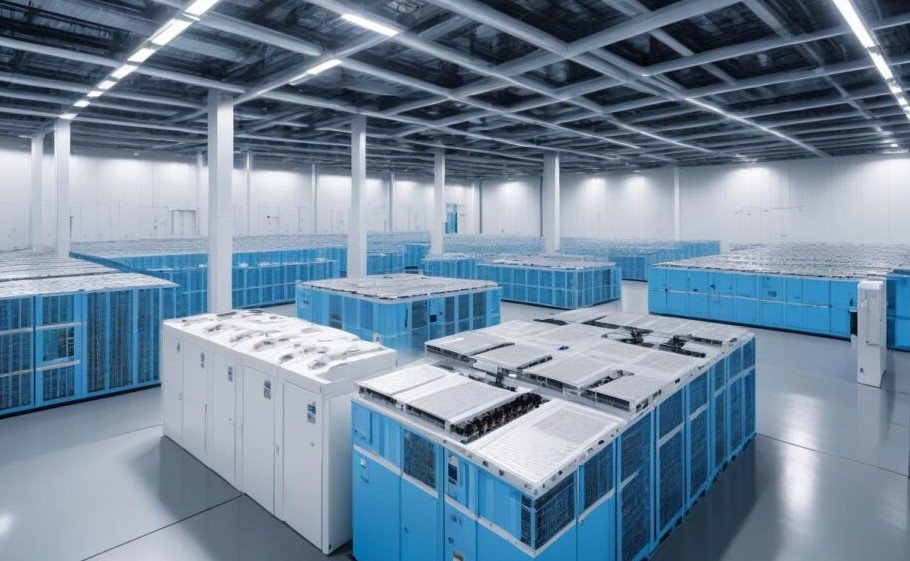
Georgia has seen extraordinary interest from technology companies building new data centers. These sprawling complexes consume huge amounts of electricity to process information, store data, and fuel advanced AI operations. Some facilities use as much power as a small city.
Georgia Power executives say dozens of companies already have confirmed plans or advanced negotiations to build in the state. That means new projects aren’t speculative. They are real, signed, and ready for power.
The scale is startling.
Some experts say it might be one of the largest infrastructure expansions ever undertaken in Georgia’s energy history.
One issue stands out: if the utility doesn’t expand, companies could go elsewhere. Competitors like Virginia, Texas, and Ohio are actively recruiting the same firms, all presenting aggressive energy offers.
The power expansion becomes less of a luxury and more like a hard requirement to stay competitive.
Political Debate Intensifies Over Customer Costs
The price tag — more than $15 billion — isn’t small. Consumer advocates argue that residential customers might bear costs for electricity demand generated by global corporations running massive AI operations.
One lawmaker noted that electricity has become a political lightning rod in Georgia. Utility bills already feel heavy for some households. Even small hikes are unpopular in an election year.
Grassroots groups have protested new data centers around Atlanta and Savannah, claiming regular consumers are indirectly subsidizing energy-hungry private companies.
Those fears have grown louder as utilities nationwide seek rate increases to support AI-driven growth.
Some residents say it feels unfair. They point out that data centers don’t look like schools, hospitals, or manufacturing plants. They have limited public interaction, consume vast energy, and rarely create thousands of permanent full-time jobs inside the buildings.
A small one-sentence pause here.
Georgia Power insists it won’t build irresponsibly. The company told regulators its contracts and development pipeline justify the capacity increase, arguing that investment will create jobs, tax revenue, and long-term economic benefits.
Utility Leaders Say Expansion is Essential for Growth
Georgia Power’s parent company, Southern Co., has positioned the state as a rising digital and AI hub. Utility leaders told regulators that the new facilities would support AI research, cloud storage, cybersecurity, and next-generation computing.
Economic development officials believe Georgia could become one of the largest AI infrastructure hubs east of the Mississippi.
Company executives highlight three core benefits:
-
Guaranteed long-term corporate load tied to signed contracts
-
Higher state tax revenue and high-paying technical jobs
-
Expanded digital infrastructure that keeps Georgia competitive
The utility says some of the electric demand is already locked in, meaning Georgia has little choice but to deliver capacity or risk losing major clients.
Regulators still need to study whether the forecasts make sense.
If the predictions are too optimistic, regular families could eventually face bills tied to unused capacity.
Demand From AI Reshapes National Energy Planning
Artificial intelligence is now a force reshaping energy policy in multiple states. Data centers powering machine learning, cloud analytics, and content processing require constant and reliable electricity. Unlike factories that may operate in shifts or seasonal surges, data centers run 24/7.
National energy experts estimate that data centers already consume more electricity in the U.S. than all television sets combined. And demand keeps rising.
Tech companies are expanding far faster than many power utilities expected. A decade ago, few predicted that computing infrastructure would grow into one of the largest industrial power consumers nationwide.
Georgia’s challenge is straightforward: build faster or fall behind.
To visualize national consumption patterns:
| Sector or System | Estimated Power Use Share in U.S. |
|---|---|
| Data Centers | Roughly 4-5% of total U.S. electricity |
| Residential Heating & Cooling | About 14% |
| Industrial Manufacturing | Around 25% |
| Commercial Buildings | Nearly 18% |
Electric analysts believe the data center share could double by 2030 if AI adoption continues at this pace. None of this is hypothetical anymore.
One senior energy planner said utilities are revising forecasts every six months instead of every five years. Growth is that unpredictable.
Regulators Face Hard Tradeoffs
Georgia’s Public Service Commission now finds itself holding one of the most consequential infrastructure decisions in recent memory. A capacity increase of this size affects generation planning, transmission lines, gas pipelines, environmental rules, and customer rates.
Commissioners must examine whether Georgia Power has enough committed corporate demand to justify the investment.
If the projections are correct, late construction could leave Georgia scrambling for power, risking blackouts or forcing expensive emergency purchases on the wholesale market.
If the projections are too high, excess facilities would sit underused — with consumers holding the bill.
Each commissioner knows the stakes. Every decision impacts households, industries, and future investment projects.
One official quietly noted that this moment mirrors historic highway expansions, saying: “Energy is becoming Georgia’s new economic development backbone.” The tone was serious.
A smaller paragraph here for pacing.
Regulators have to make decisions without hindsight. They approve plans before knowing if every data center deal fully materializes.
Data Centers Promise Jobs, But Not Always Enough for Skeptics
Supporters argue that technology investment attracts engineers, cybersecurity experts, electricians, contractors, fiber technicians, and logistics suppliers. The economic footprint spreads well beyond the walls of a data center.
Critics say the number of permanent jobs inside the buildings is often lower than public perception. Some facilities employ fewer than 50 people after construction ends.
That tension continues to fuel debate.
Data centers undeniably create construction booms. They also bring long-term tax revenue to rural counties seeking growth. But critics ask regulators to make sure those benefits outweigh large utility upgrades paid by ratepayers.
Some rural officials are thrilled. They see data centers the way past generations viewed railroads or interstate highways.
Others remain cautious, worried about power costs and land use.
Georgia Power says the expansion isn’t speculative — it’s driven by signed business demand. Opponents want regulators to verify every contract before signing off.
And behind all the debate, one thing is certain: electricity has become the battleground for digital growth.
