
Georgia’s ruling Georgian Dream party has ramped up its crackdown on dissent, charging eight top opposition figures with plotting a coup on November 6, 2025. This move, which includes jailed former President Mikheil Saakashvili, signals a sharp turn toward authoritarian control in the South Caucasus nation, sparking fears of one-party rule amid ongoing protests and international outcry.
Background of the Political Crisis
Georgia has been in turmoil since the October 26, 2025, parliamentary elections, which the Georgian Dream party claimed as a victory but opponents called rigged. Protests erupted in Tbilisi and other cities, with thousands demanding a recount and fresh votes.
The ruling party, led by billionaire Bidzina Ivanishvili, has held power since 2012. It faced backlash for passing laws seen as restricting free speech and aligning closer to Russia, despite Georgia’s push for European Union membership. In late 2024, the government halted EU accession talks until 2028, fueling more unrest.
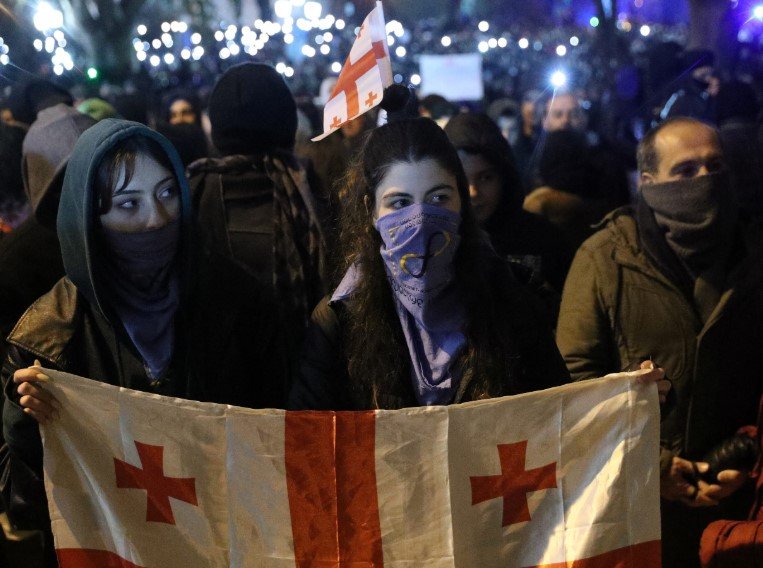
Critics argue these actions echo tactics used in nearby authoritarian states, where opposition voices get silenced through legal means. The crisis deepened when Georgian Dream filed a lawsuit on October 28, 2025, to ban three major opposition parties, calling them threats to national security.
Public sentiment has shifted, with polls showing over 60 percent of Georgians supporting EU integration. This gap between the government and citizens has led to daily demonstrations, some turning violent with police using tear gas and water cannons.
Details of the Coup Charges
Prosecutors announced the charges against the eight opposition leaders, accusing them of sabotage, aiding foreign powers, and attempting to overthrow the government. If convicted, they could face up to 15 years in prison.
The list of accused includes prominent names who have long challenged Georgian Dream’s rule. Six of them are already in custody, raising concerns about fair trials in a judiciary viewed as biased.
Here is a breakdown of the key figures charged:
- Mikheil Saakashvili: Former president, already jailed on prior convictions, known for pro-Western reforms.
- Nika Melia: Leader of the United National Movement, arrested during recent protests.
- Zurab Japaridze: Head of the Girchi party, vocal critic of government policies.
- Elene Khoshtaria: From the Droa party, focused on democratic rights.
- Nika Gvaramia: Media executive and opposition ally.
- Giorgi Vashadze: Strategy 2030 party founder.
- Mamuka Khazaradze: Businessman and Lelo party leader.
- Badri Japaridze: Another Lelo figure, tied to economic reform pushes.
These charges stem from alleged plots during post-election unrest, but evidence remains thin, with many calling it a political witch hunt.
Impact on Georgia’s Democracy
The push to ban opposition parties through the constitutional court has alarmed watchdogs. The court, packed with Georgian Dream appointees, is expected to rule in favor of the ban soon, potentially leaving no major rivals in the political arena.
This could pave the way for one-party dominance, similar to what happened in Hungary under Viktor Orban. Civil society groups report increased arrests of activists and journalists, with over 200 detentions since the elections.
Economically, the crisis has hit hard. Foreign investment dropped by 15 percent in the last quarter of 2025, per central bank data, as instability deters business. Tourism, a key sector, saw a 10 percent decline in visitors amid safety concerns.
On the streets, young Georgians lead the resistance, using social media to organize. One protester told reporters, “We’re fighting for our future, not just politics.” The government’s response has included internet shutdowns in protest hotspots, further eroding trust.
International Reactions and Pressure
The European Union and United States have condemned the charges, calling them an assault on democracy. On November 7, 2025, the EU parliament passed a resolution urging sanctions on Georgian officials involved in the crackdown.
U.S. Secretary of State Antony Blinken stated that such actions undermine Georgia’s EU aspirations. Several Western nations have frozen aid, totaling over 100 million dollars, pending reforms.
Neighboring countries watch closely. Ukraine, where Saakashvili once held citizenship, expressed solidarity, linking it to their own struggles against Russian influence. Russia, meanwhile, has praised Georgian Dream’s “stability measures,” heightening suspicions of external meddling.
Human rights organizations like Amnesty International have documented abuses, including arbitrary detentions. They warn that without intervention, Georgia risks sliding into full autocracy.
| Timeline of Key Events in Georgia’s 2025 Crisis | Date | Description |
|---|---|---|
| October 26 | Parliamentary elections held; Georgian Dream declares victory amid fraud claims. | |
| October 28 | Ruling party files lawsuit to ban three opposition parties. | |
| November 6 | Prosecutors charge eight opposition leaders with coup plotting. | |
| November 7 | EU issues condemnation and considers sanctions. | |
| Ongoing | Protests continue in Tbilisi, with daily clashes reported. |
What Lies Ahead for Georgia
Experts predict more unrest if the bans and charges proceed. Opposition leaders vow to fight legally and through public mobilization, but with key figures jailed, coordination is tough.
A potential turning point could come from the constitutional court’s ruling, expected by late November 2025. If parties get outlawed, new groups might form, but registration hurdles could block them.
Citizens hope for international mediation to force dialogue. Some analysts suggest economic pressure might push Georgian Dream to back down, as the party’s support base erodes.
In the end, Georgia’s path depends on whether democratic forces can regroup. For now, the nation stands at a crossroads between European dreams and authoritarian drift.
Share your thoughts on Georgia’s crisis in the comments below, and spread this article to raise awareness about the fight for democracy.
