
Georgia, known for its ancient vineyards and deep-rooted wine culture, is reshaping how it values its grapes — literally. Starting next year, the government plans to impose tougher price differentials for wine grapes based on quality, aiming to push farmers toward higher standards and defend the country’s centuries-old reputation in global markets.
For a country that calls wine its soul, this shift could mean a lot more than just numbers.
Why Georgia Is Changing the Way It Prices Grapes
The announcement came from Levan Mekhuzla, chairman of the National Wine Agency, who said the policy would make the pricing system “even more rigorous” beginning in 2026. He insists the reform is about fairness and pride — rewarding those who produce exceptional grapes and discouraging those who settle for substandard yields.
In plain terms, the system that debuted this year tied payment to grape quality.
-
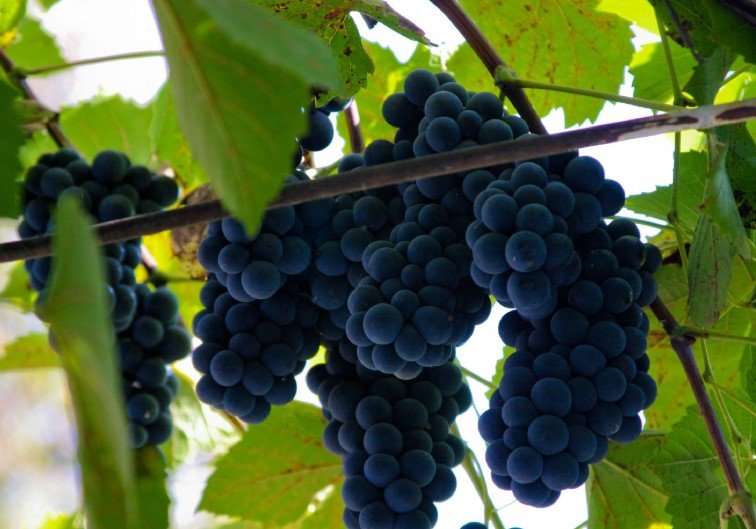
Top-tier Saperavi grapes in Kakheti fetched 1.50 GEL per kilogram.
-
Approved varieties received 1.20 GEL.
-
Lower-quality or damaged grapes were priced at 1.00 GEL.
That simple scale is set to become stricter. Officials are exploring additional categories, chemical composition checks, and improved testing at harvest centers.
Mekhuzla said this model has “already created a culture of accountability.” In his view, Georgia is learning that the taste of wine begins not in the barrel, but in the price tag attached to the grapes.
Record Harvest, Rainy Worries
It wasn’t an easy season. Heavy rainfall in Kakheti, the country’s main wine-growing region, threatened to spoil parts of the harvest. Still, many private wineries managed to produce high-quality grapes — proof, officials say, that incentives are working.
This year’s harvest was one for the record books. The National Wine Agency reported that around 336,000 tons of grapes were processed nationwide, the highest in 30 years.
Roughly 22,000 growers took part, earning a combined 475 million GEL (about $175 million).
One sentence says it all: Kakheti dominated. The region processed 327,000 tons, bringing in 432 million GEL. That’s nearly 90% of the entire country’s grape income.
Here’s a look at how the numbers break down:
| Region | Grapes Processed (tons) | Income (GEL million) | Share of Total (%) |
|---|---|---|---|
| Kakheti | 327,000 | 432 | 90% |
| Imereti | 5,500 | 18 | 4% |
| Racha | 2,000 | 10 | 2% |
| Guria & Adjara | 1,500 | 7 | 1.5% |
| Lechkhumi | 500 | 2 | 0.5% |
Despite the uneven regional distribution, all eyes are on Kakheti — a region often described as the “beating heart” of Georgian wine.
Farmers Divided: Pride or Pressure?
For many growers, the new pricing rules feel like a double-edged sword. Some call it a step toward excellence; others see it as a burden they might not be ready for.
He’s got a point. A bad storm can turn a promising crop into a batch of second-tier grapes overnight. But supporters argue that higher quality standards are the only way Georgia can compete with the likes of France, Italy, and Spain.
Private wineries, meanwhile, see opportunity. By paying more for better grapes, they can craft wines capable of fetching higher export prices. It’s a quality loop: better grapes, better wine, better income.
A Legacy That Refuses to Fade
Wine in Georgia isn’t just a business. It’s an identity — one that dates back more than 8,000 years. Archaeologists have found ancient qvevri (large clay fermentation vessels) buried in the soil, still stained with traces of grape residue. That same method of winemaking continues today, giving Georgian wines their earthy, amber character.
But in a modern, competitive market, history alone doesn’t sell bottles.
What does? Consistency, trust, and quality.
And that’s what Mekhuzla and his team are betting on. By linking prices to standards, they’re trying to pull the entire value chain — from farmer to exporter — into alignment. “We’re not punishing farmers,” he said in a televised interview. “We’re teaching the market to respect quality.”
The statement resonated with some producers who’ve been pushing for reforms for years. “Georgia’s wine is special, but we’ve been underselling it,” said Nino Jibladze, who runs a mid-sized winery near Kvareli. “The new system might finally change that.”
Global Spotlight and Market Stakes
Georgia’s wines have enjoyed a strong export rebound over the last five years. After diversifying beyond Russia, its traditional buyer, the country has steadily built markets in Poland, China, Germany, and even the U.S..
Last year, exports reached around $260 million, according to government data — a record since independence.
Yet challenges remain. Some European buyers still treat Georgian wines as niche or “experimental.” Others complain about inconsistent labeling and uneven quality across vintages. The government hopes these pricing reforms will tackle those doubts at their source.
Basically, it’s an economic bet wrapped in a cultural statement.
And let’s be honest — Georgia’s reputation depends on it. The global wine industry is fiercely competitive, with countries like Chile, Australia, and Portugal pumping out consistent, affordable wines that dominate supermarket shelves. Georgia’s edge is authenticity, but that only works if the product matches the story.
Looking Ahead: Quality Over Quantity
By the end of this year, most of Georgia’s harvest will have been processed, with only Lechkhumi still finishing up. Farmers are already talking about next season — nervously, in some cases.
They know the new rules might reshape how they work, what they plant, and even how they measure success. But many are hopeful that stricter standards will finally give Georgian wine the prestige it deserves on the world stage.
As Mekhuzla put it, “Quality isn’t a slogan. It’s our passport to global recognition.”
In a country where wine is poured not just at dinner tables but at weddings, memorials, and political celebrations, that message carries a lot of weight. And next year, as the new pricing system kicks in, Georgia’s vineyards will be watching — and tasting — closely.
