
Georgia’s leadership used a high-profile diplomatic gathering in Tbilisi this week to send a clear message: foreign policy will stay the course, even as relations with the European Union show visible strain and global fault lines keep shifting.
The tone was calm. Almost deliberately so.
A carefully staged show of unity in Tbilisi
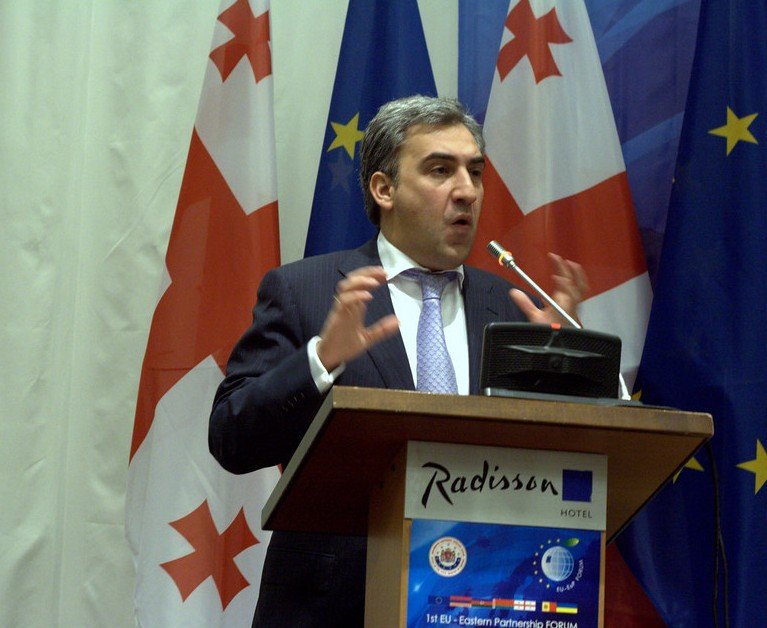
The annual Ambassadors’ Conference, running from December 22 to 25, brought together the full weight of Georgia’s political leadership and diplomatic corps in the capital. President Mikheil Kavelashvili, Prime Minister Irakli Kobakhidze, and Parliament Speaker Shalva Papuashvili all took the stage.
That lineup mattered.
In moments like these, who shows up often speaks louder than what is said. The government wanted to project coherence, predictability, and control, you know, the kind investors and partners look for when the region feels shaky.
Foreign Minister Maka Botchorishvili set the tone early. Georgia, she said, needs a consistent, pragmatic foreign policy driven by national interest to safeguard peace. It was a line repeated, echoed, and gently reinforced across panels and speeches.
One sentence. One idea. Repeated on purpose.
Europe in the background, tension in the room
The timing of the conference was no accident.
Georgia’s relationship with the European Union has grown increasingly uneasy, with Brussels raising concerns about democratic standards and governance. The sharpest signal yet came with a critical review of the EU’s visa waiver mechanism, a system that allows Georgian citizens to travel visa-free across the bloc.
That issue hovered over the conference like a low cloud.
Officials avoided confrontation in public remarks, but the message was clear enough. Georgia’s foreign policy path, they insisted, is fixed and has “no alternative,” even if criticism from Europe grows louder.
One diplomat, speaking privately on the sidelines, described the mood as “measured, not defensive.” The leadership, they said, believes restraint is a strategic choice, not a weakness.
Basically, stay calm and don’t blink.
Trade routes over treaties
If political integration with Western institutions felt muted, economic geography took center stage.
Again and again, speakers returned to Georgia’s role as a transit hub linking Asia and Europe through the so-called Middle Corridor. Ports, railways, roads, logistics. This was the language of the conference.
Botchorishvili pointed to rising investor interest and Georgia’s growing profile in regional transit networks. The argument was straightforward: location is destiny, and Georgia intends to use it.
In hallway conversations and panel discussions, officials framed connectivity as a stabilizing force, something tangible amid diplomatic friction. It’s easier to sell trade routes than political alignment right now.
Key elements highlighted during the discussions included:
-
Georgia’s position between the Black Sea and Central Asia
-
Increased freight volumes along east-west transport lines
-
Interest from regional and Gulf-based investors in logistics and infrastructure
Economic pragmatism, analysts say, now defines Georgia’s external messaging more than values-based alignment.
That shift hasn’t gone unnoticed in European capitals.
Security, sovereignty, and the Russia question
Security concerns were never far from the surface.
Officials reaffirmed Georgia’s commitment to sovereignty and its long-standing policy of non-recognition of Russian control over Abkhazia and South Ossetia. Diplomats were cast as frontline defenders against disinformation and political pressure, especially in international forums.
Discussions also touched on ongoing legal cases against the Russian Federation in international courts, as well as efforts to keep conflict resolution on a peaceful track.
Still, criticism at home remains sharp.
Opposition parties and sections of civil society argue that the government’s cautious tone risks drifting closer to Moscow’s interests, even if unintentionally. Authorities strongly reject that claim, repeating a familiar line: avoiding confrontation does not equal alignment.
One senior official put it bluntly. “Silence is not surrender.”
The Russia question, it seems, is less about policy shifts and more about optics, and optics are hard to control.
A multipolar world and fewer certainties
Beyond Georgia’s borders, leaders framed the debate in broader terms.
The international system, they argued, is no longer defined by clear blocs or simple alliances. Power is spread out. Influence shifts. Smaller states must think carefully, sometimes uncomfortably, about how they move.
In this context, Georgian officials said national interest must guide decisions, even if that means disappointing partners or resisting pressure from multiple directions at once.
That framing allows room to maneuver, but it also comes with risks. Ambiguity can buy time. It can also test trust.
As the conference wrapped up its early sessions, one thing was evident. Georgia is betting that steadiness, even if misunderstood, will serve it better than sharp turns or loud declarations.
