
Georgia moved quickly this week to pass a controversial bill that tightens restrictions on peaceful assemblies and expands police authority over demonstrations. Rights groups warn that the proposal could shrink political freedoms at a moment of heightened public tension in the country.
Protests have been filling Tbilisi’s streets for weeks after officials paused talks on joining the European Union. Crowds want political prisoners freed and new elections. This bill could make those gatherings harder and riskier.
Expanded Notification Rules Raise Serious Concerns
Lawmakers are trying to broaden existing notification rules for public gatherings. Until now, organizers had to notify authorities only if a demonstration would block a road used by cars. The new bill would require advance written notice for any area meant for vehicles or pedestrians.
For many cities, this would apply to almost every protest. One sentence is enough to see how fast these rules could change daily life.
Thousands of Georgian citizens have become used to spontaneous rallies, especially near parliament and other government buildings. Under the new bill, this flexibility could disappear.
Pro-democracy organizations argue that requiring paperwork for every gathering will slow expression and weaken free speech rights. It adds bureaucratic hoops that make a protest less immediate, less emotional, and frankly less effective.
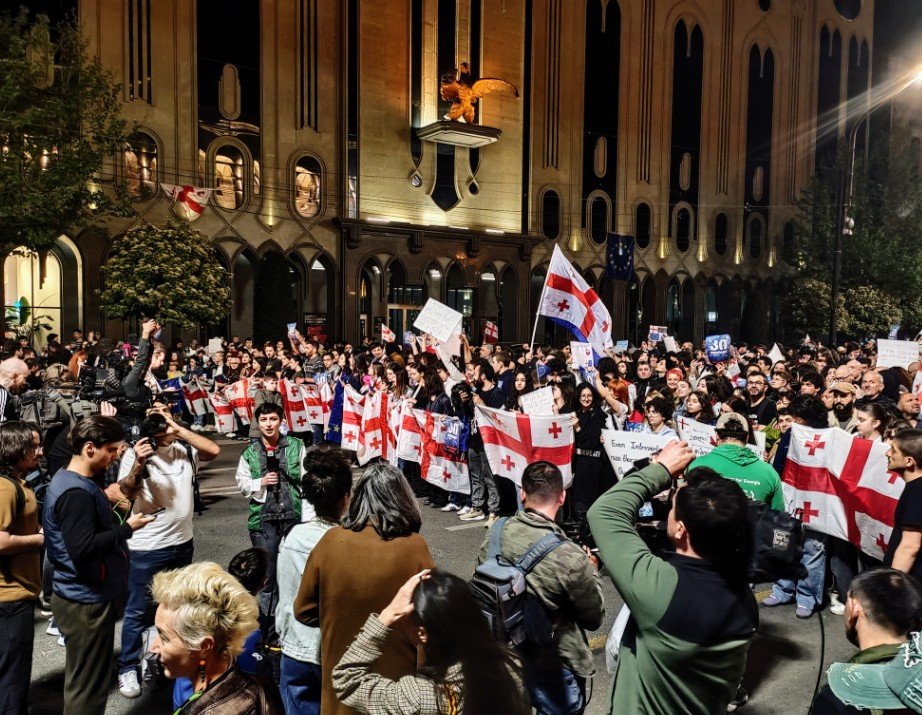
One activist in Tbilisi told me that protests are often fast responses to political decisions. “Sometimes we need to react the same night, or even the same hour,” she said.
Bullet point worth noting:
-
New notification requirements could apply to nearly all streets, sidewalks, plazas, and political spaces, making spontaneous rallies difficult and legally risky.
That is a big shift from the previous standard, and the language leaves little room for interpretation. Officials could use these rules to stop rallies before they even start.
Another paragraph that stands alone:
Rules with wide scope have a way of expanding power far beyond what anyone expected.
Police Granted Broad Discretion Under New Proposal
Under the draft, police could issue binding instructions about where a protest may happen, when it must end, and how participants must move. These instructions could be justified using broadly worded claims like protecting public order or protecting human rights.
A one-sentence paragraph helps break the structure:
Authorities will get more room to shut down demonstrations without a full legal review.
Supporters of the bill claim that police need tools to reduce disruption, especially near state buildings or during major traffic hours. They say streets and institutions need to function safely.
But critics worry that vague rules allow abuse of power. The words used in the draft are open-ended and leave judgment to individual officers on the ground. This could lead to uneven enforcement, selective crackdowns, and pressure on political opposition.
Opposition lawmakers argue the bill creates a chilling effect. People could decide against organizing rallies if they fear sudden police orders or relocation demands at the last minute.
A short emotional sentence:
This uncertainty alone can silence citizens.
Tough New Penalties Raise the Stakes
Breaking administrative protest rules in Georgia has always carried fines. But the new bill sharply increases the consequences. Failure to file advance notification—once a fine—would now include a penalty of up to 20 days of administrative detention.
Even refusing a police order to relocate a rally could mean up to 15 days for participants and up to 20 days for organizers. Repeat offenses could cross into criminal territory, meaning jail time that lasts months or years.
This escalation feels extreme for something as fundamental as civil expression. Protest organizers, who often act on a voluntary basis, suddenly face the risk of long detention or even prison sentences.
Table below helps make the comparison clear:
| Violation | Current Penalty | Penalty Under New Bill |
|---|---|---|
| No advance notification | 2,000 GEL fine | Up to 20 days detention |
| Failure to comply with relocation order | Fine | Up to 15 days for participants, 20 days for organizers |
| Repeat protest violations | None | Up to 1 year jail for participants, up to 4 years for organizers |
A quick sentence that stands alone:
Those numbers are no joke.
Such penalties could intimidate people before they ever choose to attend a rally. Even peaceful participants, who never touch a barricade or raise a fist, could end up behind bars if police issue relocation instructions during the event.
Some local lawyers say that everyday decisions made by officers could suddenly have long-term consequences for citizens with otherwise clean records. This is far from a small procedural issue.
Political Timing Fueling Public Frustration
This bill arrives amid growing political friction in Georgia. The government suspended talks on joining the European Union, triggering daily marches and student-led demonstrations. People argue that EU membership represents democratic values and civil liberties.
These rallies have been noisy, emotional, and energetic. Evidence shows that thousands gather daily, including retirees, young activists, and working-class groups.
The proposal is moving under a fast-tracked legislative procedure, which means lawmakers are bypassing the usual review schedule. Critics say there is no valid explanation for the rush. Some worry that the administration is using legal shortcuts to weaken public expression before elections or major decisions.
A one-sentence paragraph again:
Fast procedures make it harder for civic groups to offer feedback.
Civil society leaders insist that peaceful assembly is a foundational democratic right. International bodies, including the European Court of Human Rights, treat spontaneous protests as legitimate expressions of public sentiment.
In interviews across Tbilisi, protesters say the bill feels like a warning. Some described it as a legal wall meant to keep political dissent quiet. Others compare it to tactics used by neighboring governments that saw their democratic space shrink slowly over time.
International Standards and Human Rights Questions
Georgia’s constitution protects free assembly. The country is also bound by international conventions, including those governing protest rights. This raises serious questions about whether the bill complies with global human rights standards.
Rights monitoring experts argue that governments must allow spontaneous gatherings unless clear and proportionate risks exist. Restrictions need to be justified, temporary, and minimally intrusive. But the language in this proposal is broad, open-ended, and permanent.
One paragraph alone:
It is easy to imagine police using these rules more aggressively during election seasons or politically charged movements.
Human rights organizations, including regional watchdogs, are urging parliament to withdraw the bill immediately. They argue that healthy democracies tolerate disruption, disagreement, and noise. Protest is not a comfortable right. It is a necessary one.
Several European officials have warned that tightening protest rules could impact future talks between Georgia and international partners. That includes institutions considering political and financial cooperation. Countries that move away from free expression sometimes face diplomatic consequences.
And yes, voters may feel this shift personally. Losing the ability to organize quickly or express frustration can make government feel distant. People wonder whose voices are allowed and whose are managed.
