
Astronomers have spotted a small asteroid called Arjuna 2025 PN7 that acts like a temporary companion to Earth, looping in a special orbit around our planet without being truly bound by gravity. This quasi-moon, discovered in August 2025, has been sharing Earth’s path since the 1960s and could stick around until the 2080s, offering fresh insights into space objects near our world.
What Makes Arjuna 2025 PN7 Special
This asteroid stands out because it follows an orbit very close to Earth’s own path around the Sun. Unlike our real Moon, which is locked in by gravity, 2025 PN7 moves in a 1:1 resonance with Earth. That means it takes about the same time to circle the Sun as we do, but its path wobbles in a way that keeps it nearby for decades.
Experts say these quasi-satellites are part of a group called the Arjuna asteroids, named after a fast-moving hero from ancient stories. They form a kind of secondary belt of rocks that drift close to Earth. The discovery of 2025 PN7 adds to a growing list of such objects, showing how crowded our cosmic neighborhood can be.
Recent studies confirm that 2025 PN7 measures about 10 to 20 meters across, small enough to evade detection until advanced telescopes like Pan-STARRS in Hawaii picked it up. Its faint light and Earth-like speed made it hard to spot earlier, but archived images now trace it back over 60 years.
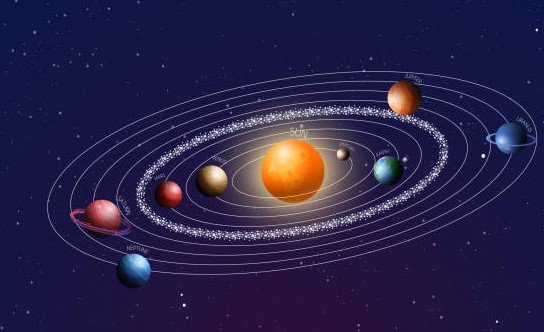
How Quasi-Moons Work
Quasi-moons like 2025 PN7 do not orbit Earth directly. Instead, they circle the Sun while staying in sync with our planet’s movement. From Earth’s view, it looks like the asteroid is drawing big loops around us, but gravity from the Sun keeps the real control.
This setup happens due to orbital resonance, where the asteroid and Earth pull on each other just enough to stay paired without a full capture. Scientists compare it to two dancers moving together but not touching. Over time, small tugs from other planets can shift these paths, ending the partnership.
For 2025 PN7, models show it entered this state around 1960 and might leave by 2080. That gives researchers over a century of data to study. Similar quasi-moons have come and gone before, like 2002 AA29, which hung around for years but eventually drifted away.
Astronomers use computer simulations to predict these movements. These tools help track potential risks, though 2025 PN7 poses no threat. It stays at a safe distance, never closer than millions of kilometers.
Discovery and Recent Buzz
The asteroid first showed up in surveys on August 2, 2025, thanks to the Pan-STARRS telescope. Teams in Spain, led by Carlos and Raúl de la Fuente Marcos, analyzed its path and published findings in September 2025. They named it after the Arjuna class due to its low-eccentricity orbit.
News of 2025 PN7 spread quickly in October 2025, with reports from major outlets sparking public interest. People wondered if Earth now has two moons, but experts clarified it is not a true moon. Social media buzzed with animations showing its looping path, shared by asteroid trackers like Tony Dunn.
This find ties into broader trends in space observation. In 2025 alone, telescopes have spotted dozens of near-Earth objects, including temporary mini-moons. For example, asteroid 2024 PT5 briefly orbited Earth earlier this year before heading off.
Public excitement grew as live streams and videos explained the science. One popular clip from a science channel described how quasi-moons could teach us about solar system formation.
-
-
- Key facts about the discovery:
- Detected: August 2, 2025
- Size: 10-20 meters
- Orbital period: About 1 year, matching Earth
- Distance from Earth: Varies, but always safe
- Key facts about the discovery:
-
Why This Matters for Science and Safety
Studying 2025 PN7 helps scientists understand how asteroids behave near Earth. It acts like a natural lab for testing ideas on gravity and orbits. Researchers hope to learn more about how these objects form and why some stick around longer than others.
On the safety side, tracking quasi-moons improves our ability to spot potential hazards. While 2025 PN7 is harmless, similar asteroids could pose risks if their paths change. Space agencies like NASA use this data to refine defense strategies against impacts.
This discovery also boosts interest in asteroid mining. Objects like 2025 PN7 might hold metals or water useful for future space missions. Its stable path makes it a good candidate for study without the need for immediate action.
Experts believe there could be more quasi-moons out there. Recent estimates suggest Earth might have up to six others waiting to be found, based on orbit patterns.
| Aspect | Details |
|---|---|
| Class | Arjuna asteroid |
| Resonance Type | 1:1 with Earth |
| Duration as Quasi-Moon | 1960s to 2080s |
| Potential for Missions | High, due to Earth-like orbit |
| Risk Level | None |
Looking Ahead to More Discoveries
As telescopes get better, more quasi-moons will likely turn up. Projects like the Vera C. Rubin Observatory, set to start full operations in 2025, could reveal hundreds of near-Earth objects each year. This will expand our knowledge of the Arjuna group and their role in the solar system.
For now, 2025 PN7 reminds us that space is full of surprises. It shows how even small rocks can teach big lessons about our place in the universe.
Share your thoughts on this cosmic companion in the comments below, and pass this story along to friends who love space news.
