
Earth is set to encounter a powerful solar event as multiple coronal mass ejections merge into a cannibal CME, prompting NOAA to issue a G4 geomagnetic storm warning for November 12, 2025. This intense activity stems from an X5.1 class solar flare from sunspot region AR4274, one of the strongest flares this year, which could disrupt power grids, satellites, and communications while sparking vivid auroras across wide areas.
Solar Flare Sparks Major Alert
The Sun unleashed a massive X5.1 flare on November 11, 2025, at around 10:04 UTC, marking the third strong flare from the same sunspot in just three days. This eruption sent a burst of energy and particles hurtling toward Earth, with models showing it overtaking earlier ejections to form a single, amplified storm.
Experts describe this as a cannibal CME, where a faster ejection consumes a slower one, boosting its strength. Such events can heighten geomagnetic disturbances, leading to widespread effects. The flare also caused immediate radio blackouts over parts of Africa and Europe, highlighting the Sun’s current high activity phase in its 11 year cycle.
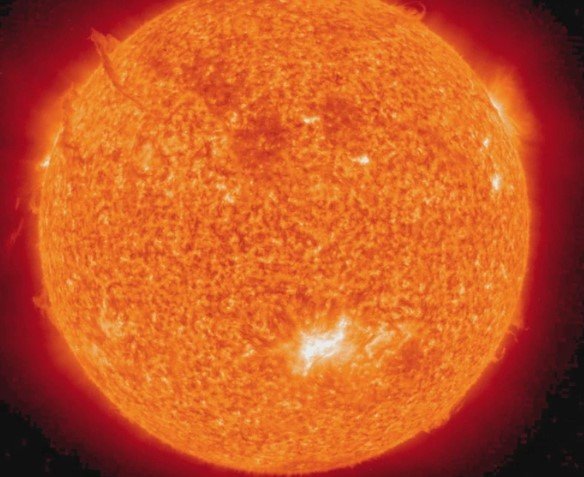
This year has seen a spike in solar events, with several X class flares pushing activity to levels not seen since the early 2000s. The timing aligns with the solar maximum, a period when sunspots and flares peak, increasing the odds of Earth directed storms.
Understanding Cannibal CMEs
A cannibal CME happens when coronal mass ejections, huge clouds of plasma and magnetic fields from the Sun, travel at different speeds and merge en route to Earth. This fusion creates shock waves and stronger magnetic fields, making the impact more severe than individual ejections.
In this case, the X5.1 flare’s CME is expected to catch up with ones from prior flares, arriving as a combined force. Past events, like a similar storm in 2024, showed how these can trigger global auroras and minor power issues.
Scientists track these using satellites like GOES and models that predict arrival times. For this storm, arrival is forecasted for midday November 12, with effects lasting up to 48 hours.
Cannibal CMEs are rare but potent, often leading to G4 or higher storms. They remind us of the Sun’s influence on modern life, from navigation to electricity.
The current solar cycle, which began in 2019, is proving more active than predicted, with over 200 sunspots observed this month alone.
Potential Impacts on Daily Life
A G4 geomagnetic storm can affect various systems, though most people won’t notice direct changes. Power grids might experience voltage fluctuations, especially in high latitude areas like northern Canada and Scandinavia.
Satellites could face increased drag and radiation, potentially disrupting GPS signals and airline communications. In extreme cases, this leads to rerouted flights over polar regions to avoid radiation risks.
Radio operators and amateur astronomers often report blackouts during such events, as charged particles interfere with high frequency signals.
Here are key potential effects:
- Power systems: Induced currents could strain transformers, but modern grids have safeguards.
- Communications: Possible interruptions in satellite based services like internet and TV.
- Navigation: GPS errors might occur, affecting drivers and pilots.
- Radiation: Astronauts on the International Space Station take precautions against elevated levels.
While severe, G4 storms are manageable with warnings, unlike the rare G5 events that caused widespread blackouts in 1989.
Where Auroras Might Shine
One silver lining of this storm is the chance for stunning northern lights displays. Auroras could be visible as far south as Alabama and northern California, far beyond typical viewing spots.
In the northern hemisphere, prime locations include Alaska, Canada, and parts of the northern United States. Clear skies and low light pollution boost chances of seeing the colorful spectacle.
Viewing tips include heading to dark areas after sunset and using apps to track storm intensity. The lights often appear as green and purple waves dancing across the sky.
This event echoes a 2024 storm that lit up skies in unusual places, drawing crowds and photographers.
How Experts Are Responding
Space weather centers worldwide are monitoring the situation closely. NOAA’s Space Weather Prediction Center upgraded the watch to G4 based on real time data, with a slight chance of reaching G5 levels.
Forecasters use tools like solar telescopes and computer simulations to refine predictions. International agencies coordinate to protect critical infrastructure.
Recent advancements in forecasting have improved accuracy, helping utilities and airlines prepare in advance.
| Storm Level | Description | Potential Effects |
|---|---|---|
| G1 (Minor) | Weak disturbances | Minor power fluctuations, faint auroras at high latitudes |
| G2 (Moderate) | Moderate activity | Possible satellite issues, auroras in northern states |
| G3 (Strong) | Significant impacts | Voltage corrections needed, widespread auroras |
| G4 (Severe) | Major storm | Grid strain, GPS disruptions, auroras in mid-latitudes |
| G5 (Extreme) | Rare and intense | Widespread blackouts, global communications failure |
This table shows the geomagnetic storm scale, with the current warning at G4.
Preparing for the Storm
Individuals can take simple steps to minimize risks. Charge devices ahead of time and have backup power sources ready for any outages.
Stay informed through weather apps and official alerts. For those in affected industries, like aviation or energy, following protocols ensures safety.
This event underscores the need for ongoing investment in space weather research, as solar activity influences everything from climate to technology.
Share your thoughts on this solar storm in the comments below, and pass this article along to friends who might enjoy chasing auroras or learning about space weather.
