
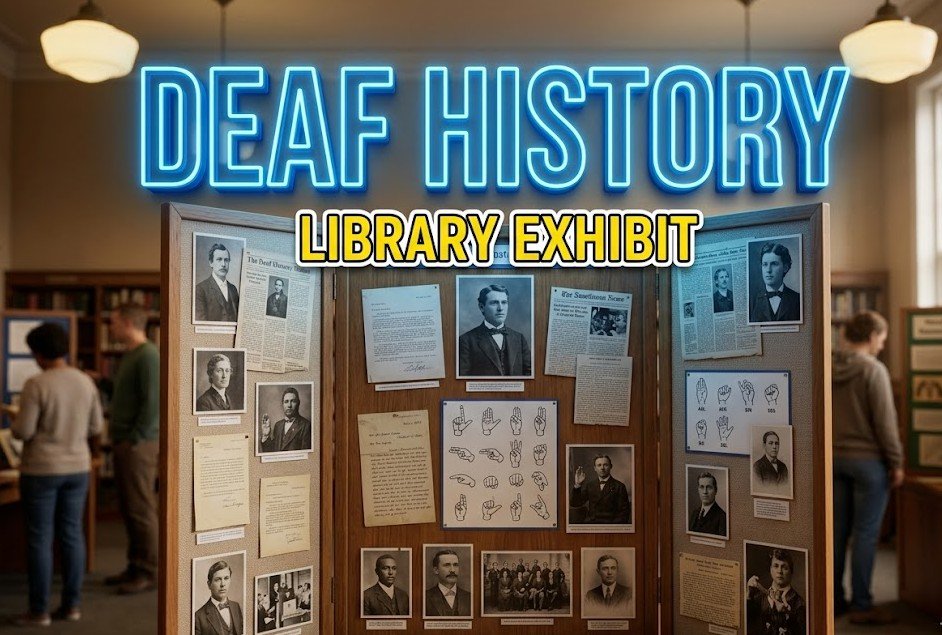
A simple idea has now turned into a meaningful community event in Georgia. What began as a delayed plan is finally coming to life as a powerful tribute to Deaf culture and history at the Cedartown Library this April.
The exhibit, led by local advocate Adonia K. Smith, not only highlights national milestones but also brings attention to the often overlooked stories of Deaf individuals in the region.
Local effort brings Deaf stories into spotlight
The initiative started with a vision to create awareness during Deaf History Month, which is observed annually from March 13 to April 15. This period honors key milestones in Deaf education and civil rights, including the founding of the first school for the deaf and major breakthroughs in representation.
Smith, a Cedartown native and founder of ASL Rose, partnered with Arleigh Johnson, director of the Polk County Historical Society Museum, to bring the project to life.
Their collaboration transformed a small idea into a six-board visual exhibit.
They began working together in late March, organizing materials and designing trifold boards that present both national Deaf history and local contributions from Deaf Georgians.
The exhibit will be displayed throughout April at the Cedartown Library, offering visitors a chance to learn, reflect, and connect.
What Deaf History Month means and why it matters
Deaf History Month is more than a celebration. It is a reminder of progress, challenges, and the ongoing push for inclusion.
Key facts about Deaf History Month:
- Observed from March 13 to April 15 each year
- Recognizes milestones in Deaf education and civil rights
- Widely supported by libraries, schools, and advocacy groups
- Promotes awareness of American Sign Language and Deaf culture
The observance began in the 1990s and has strong roots in library communities, making the Cedartown exhibit especially meaningful.
Libraries have historically played a key role in spreading Deaf awareness and accessibility.
Events during this period often include educational displays, sign language sessions, and discussions on accessibility and inclusion.
Behind the scenes of the Cedartown exhibit
The exhibit itself reflects both passion and persistence.
Smith originally planned the display last year but was unable to complete it. This year, she revisited the idea with renewed determination and support from Johnson.
Together, they worked at the Polk County Historical Society Museum to assemble the display boards.
The process was not without challenges.
Smith balanced caregiving responsibilities while preparing the exhibit, even bringing family members along during work sessions to ensure their safety.
What began as four boards quickly expanded into six, showing the depth of the story they wanted to tell.
Each board focuses on a different aspect of Deaf history, blending national achievements with local narratives that resonate more deeply with the community.
Why local history adds powerful impact
While national milestones are important, the Cedartown exhibit stands out for its focus on local voices.
By highlighting Deaf individuals and stories from Georgia, the exhibit creates a stronger emotional connection for visitors.
This approach helps answer a key question many people have.
Why does Deaf history matter to me?
The answer becomes clearer when people see how it connects to their own communities.
Local storytelling also helps:
- Build empathy and understanding
- Encourage community pride
- Inspire future generations
- Promote inclusive education
Smith’s work through ASL Rose reflects this mission, focusing on education, awareness, and community engagement.
A growing movement of inclusive community events
The Cedartown exhibit is part of a broader trend across the United States, where libraries and community groups are creating inclusive programs.
From interactive story sessions for Deaf children to public awareness campaigns, these efforts are gaining momentum.
Recent community events have shown that:
- Families are seeking more inclusive spaces
- Libraries are expanding accessibility programs
- Awareness of Deaf culture is steadily growing
The Cedartown Library display fits into this larger movement, proving that even small towns can lead meaningful change.
By combining education with local storytelling, the exhibit offers a model that other communities can follow.
A simple idea that sparked a meaningful change
What started as a postponed plan has now become a symbol of dedication and community spirit.
The Cedartown Library exhibit is not just about history. It is about visibility, respect, and connection.
As visitors walk through the display this April, they will see more than boards and facts. They will see stories that deserve to be heard.
And perhaps, they will leave with a deeper understanding of a community that continues to shape society in powerful ways.
What do you think about such local initiatives celebrating Deaf History Month? Share your thoughts and spread awareness with your friends and family.
