
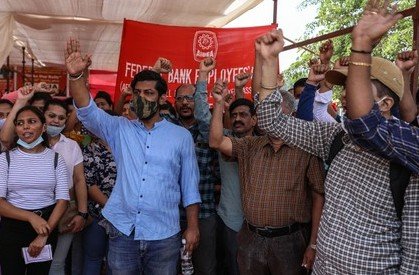
Bank employees’ unions in India are once again drawing a hard line. A proposed nationwide strike on January 27 is now on the table, with unions saying patience has worn thin over delays in moving the banking sector to a five-day work week.
The warning has put public sector banks, customers, and policymakers on edge, especially because the timing could stretch disruptions across three straight days.
A Familiar Demand, This Time With a Date
The strike call has come from unions operating under the umbrella of the United Forum of Bank Unions, better known as UFBU. The forum represents a wide cross-section of bank employees, largely from public sector lenders.
Their central demand is simple, and frankly not new. They want banks to operate on a five-day week, aligning working days with most other government offices and large institutions.
January 27 is a Monday. On its own, that might seem manageable. But January 25 is a Saturday and January 26 is Republic Day, a national holiday. Put together, the strike could shut public sector banks for three days in a row.
That prospect has already started to worry customers, especially small businesses and pensioners who rely on in-branch services.
Union leaders argue the ask is reasonable. They point out that many sectors, including insurance companies and government departments, already follow a five-day schedule.
“This is not about working less,” one union official said, speaking informally. “It’s about working smarter and with dignity.”
How Bank Working Days Got Here in the First Place
At present, bank employees get Sundays off along with the second and fourth Saturdays of each month. The first and third Saturdays remain working days, often among the busiest.
There was, however, a partial breakthrough less than two years ago.
During the wage revision settlement signed in March 2024 between unions and the Indian Banks’ Association, both sides agreed in principle to treat the remaining two Saturdays as holidays.
That agreement raised expectations across the sector. Many employees assumed the shift to a full five-day week was just a matter of time.
Time, it seems, has stretched on.
Union representatives now say repeated reminders and meetings have led nowhere. According to them, there has been no clear signal from the government, which ultimately has the final say for public sector banks.
One sentence sums up their frustration: talks happened, promises were made, but the calendar never changed.
Why January 27 Could Sting More Than Usual
This isn’t the first time bank unions have threatened industrial action. Strikes have been part of the sector’s history for decades. What makes this one different is the calendar math.
A one-day strike normally causes inconvenience. A three-day disruption, especially at month-end, can snowball.
Salary credits, government benefit disbursements, cheque clearances, and branch-based services could all face delays. While digital banking cushions some of the blow, it does not replace everything.
Key areas likely to feel pressure include:
-
Cash deposits and withdrawals at branches
-
Clearing of physical cheques
-
Processing of pension payments and government-linked schemes
Rural and semi-urban regions, where branch visits still matter a lot, may feel it more sharply.
Private sector banks are expected to function normally, but their reach does not fully cover the gap left by public lenders, especially outside major cities.
Unions Say Hours Can Stretch, If Needed
A common argument against a five-day work week has been the fear of lost productivity. Unions are clearly trying to disarm that concern upfront.
UFBU leaders say they have already agreed to longer daily working hours if the five-day system is approved. In other words, total weekly work time would stay broadly the same.
It’s a point they keep repeating, almost like a refrain.
According to union officials, the change is less about counting hours and more about reducing burnout, improving focus, and giving staff predictable rest days. Many bank employees handle high transaction volumes, compliance checks, and customer pressure on a daily basis.
Burnout, they argue, is real. And it shows up quietly, in errors, stress leave, and attrition.
Whether policymakers see it the same way remains unclear.
A Sector That Has Changed, Even If Schedules Haven’t
Banking in India is not what it was ten or even five years ago. Digital transactions have exploded, branch footfall has changed, and back-end compliance has become heavier.
Yet, working patterns remain stuck in an older rhythm.
Here is a quick snapshot of how bank working schedules compare with other major institutions:
| Institution Type | Weekly Working Days |
|---|---|
| Central government offices | 5 |
| Insurance companies | 5 |
| Private corporations | 5 |
| Public sector banks | 5.5 (alternate Saturdays) |
That half-day difference, unions say, has become harder to justify as workloads migrate across channels.
Customers, on the other hand, often see banks as essential services and expect access when they need it. That tension sits right at the heart of this dispute.
What Happens Next Is Still an Open Question
As of now, the strike notice stands. There has been no official rollback, and unions say they are prepared to go ahead if there is no concrete response.
Historically, last-minute negotiations have sometimes defused such situations. Meetings between union leaders, the Indian Banks’ Association, and government representatives often intensify in the days leading up to a strike.
But there is no guarantee this time.
The government has been cautious, balancing employee demands against public inconvenience and fiscal optics. A formal announcement on working days would have system-wide implications, from staffing norms to branch-level operations.
For customers, the advice is unofficial but practical. Plan ahead, finish urgent branch work early, and keep an eye on updates from banks.
For now, January 27 sits on the calendar like a blinking warning light. Whether it turns red or fades away will depend on what happens behind closed doors in the days ahead.
