For decades, ammonites were grouped with dinosaurs as victims of the same cosmic disaster. New research suggests that story was wrong. These ancient sea creatures survived the asteroid impact — and met their end later, under very different conditions.
Rethinking the day everything supposedly ended
For a long time, the narrative felt settled. About 66 million years ago, an asteroid slammed into Earth and wiped out the dinosaurs, ammonites included. End of story. Clean. Brutal. Final.
But science has a habit of reopening closed books.
A recent study published in Scientific Reports is forcing paleontologists to rethink ammonites’ final chapter. According to the research, some species of these spiral-shelled marine animals survived the asteroid impact linked to the Cretaceous–Paleogene extinction event.
That survival, even if brief in geological terms, changes everything.
If ammonites didn’t disappear immediately after the impact, then what actually killed them?
An ancient success story hiding in plain sight
Ammonites were not fragile creatures limping through deep time. They were survivors, plain and simple.
These marine animals thrived for more than 340 million years, long before dinosaurs walked the land and long after earlier mass die-offs reshaped life on Earth. They adapted. They diversified. They kept going.
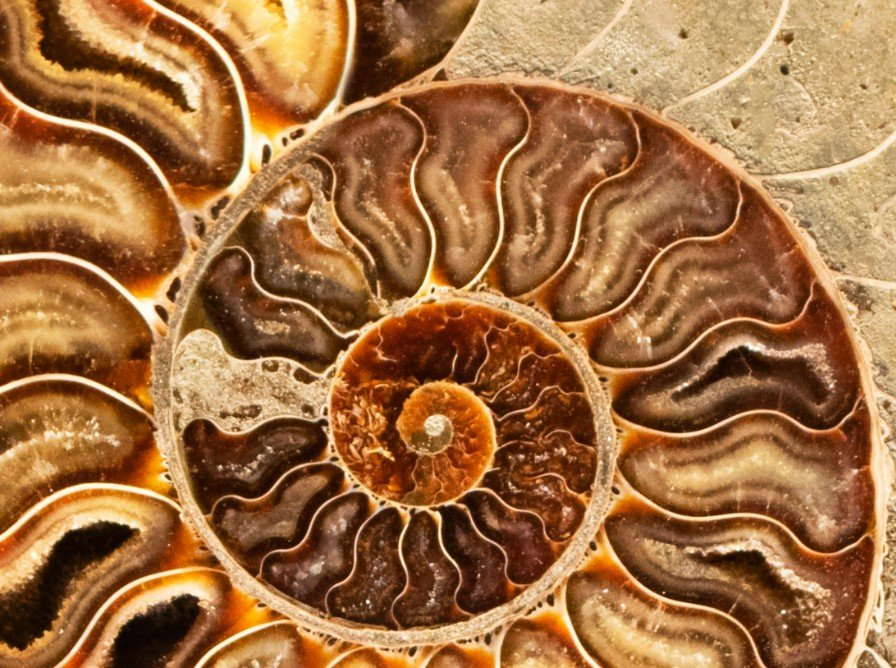
Fossils of ammonites have been found across the globe, from the cliffs of Morocco to England’s Jurassic Coast. Their shells, often preserved in stunning detail, tell a story of evolutionary flexibility and ecological dominance.
They endured three mass extinctions before the asteroid that ended the age of dinosaurs. That fact alone makes their disappearance suspiciously abrupt.
One sentence sums it up well: creatures that tough usually don’t vanish overnight.
What the new evidence actually shows
The study behind this reassessment focused on fossil layers previously assumed to mark ammonites’ final appearance. Researchers took a closer look at the timing, chemical signals, and sediment patterns surrounding those fossils.
What they found was surprising.
Some ammonite species appear in layers deposited after the asteroid impact. Not much later, but enough to matter. Long enough to suggest survival, reproduction, and continued presence in post-impact oceans.
That raises an uncomfortable question for the old theory.
If ammonites survived Earth’s most famous extinction event, then blaming the asteroid alone no longer works.
A slow collapse rather than a sudden blow
So what changed after the impact?
Scientists now point to environmental chaos that unfolded in the aftermath. Oceans didn’t bounce back quickly. Conditions became unstable. Food webs shifted in unpredictable ways.
Several factors are now under scrutiny:
-
Long-term ocean acidification caused by atmospheric changes
-
Collapse of plankton populations that formed the base of marine food chains
-
Extended climate swings that disrupted breeding and migration cycles
None of these would have caused instant death. Instead, they suggest something slower. Attrition. A grinding down of once-stable ecosystems.
Basically, ammonites survived the blast, but not the aftermath.
When survival isn’t enough
There’s a cruel irony in this revised timeline.
Ammonites escaped the single most violent moment in Earth’s recent history, only to fade away during a prolonged environmental downturn. No dramatic explosion. No single villain. Just conditions that grew steadily worse.
That kind of extinction is harder to spot in the fossil record. It lacks a clear boundary line. It doesn’t come with a smoking gun crater.
And yet, it may be far more common.
The study suggests ammonites declined over a few hundred thousand years following the asteroid impact. In human terms, that’s unfathomably long. In geological time, it’s a blink.
Still, it’s enough time for ecosystems to unravel piece by piece.
Why this discovery matters now
This isn’t just about correcting a footnote in prehistory.
Rewriting the ammonite extinction forces scientists to rethink how mass extinctions actually work. They may be less about single catastrophic moments and more about what follows them.
One bad day might start the process. The real damage happens later.
That idea resonates beyond paleontology. It mirrors how modern ecosystems respond to shocks. A disaster hits. Life continues. Then secondary effects pile up, quietly, relentlessly.
Studying ammonites offers a deep-time case study in delayed collapse.
Fossils that refused to stay silent
Ammonites have always been favorites among fossil collectors and researchers, partly because their shells preserve so well. Those same fossils are now revealing details that were overlooked for decades.
New dating methods, improved chemical analysis, and better global fossil comparisons have allowed scientists to spot inconsistencies that older models missed.
In hindsight, the warning signs were there.
But science moves forward by questioning assumptions, even the comfortable ones.
A humbling reminder from deep time
There’s something sobering about ammonites’ story.
They survived ice ages, shifting continents, volcanic cataclysms, and yes, an asteroid impact that ended the dinosaurs. What finally erased them wasn’t one dramatic event, but a world that slowly became unlivable.
That distinction matters.
It reminds us that survival after catastrophe doesn’t guarantee recovery. Sometimes, the hardest part comes after the headlines fade.