Georgia’s massive forestry industry is facing its toughest test in decades. A wave of paper mill closures, combined with the long shadow of Hurricane Helene in 2024, has pushed the state’s timber economy into crisis. Now, lawmakers have stepped in with new bills aimed at keeping the industry alive and preventing long term collapse.
Paper mill closures hit Georgia timber hard
Georgia is the top state in the nation for forest product output and annual timber harvest. But that leadership is under pressure as major paper mills shut down and demand for pulpwood drops sharply.
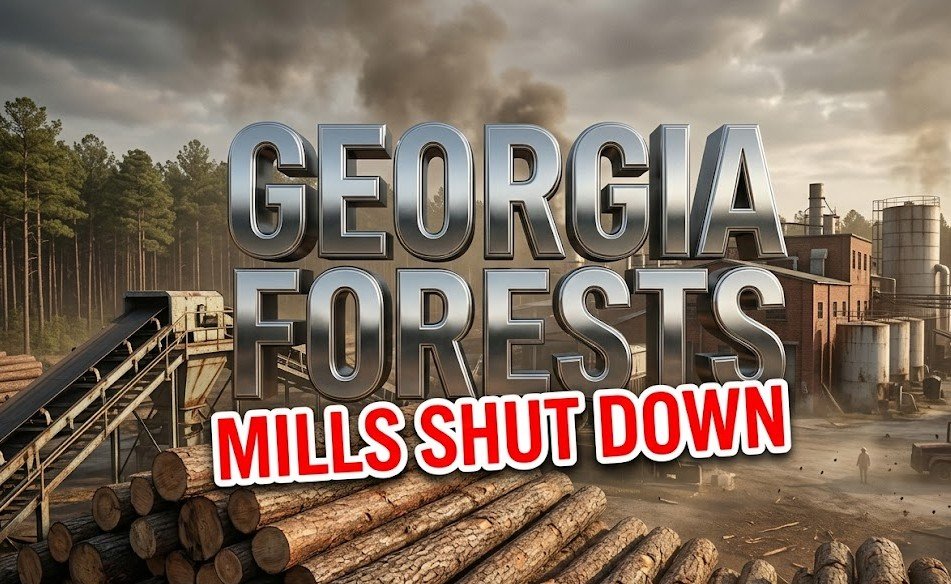
In the past year, several large mills in South Georgia closed, including facilities in Savannah, Riceboro, and Cedar Springs. These closures removed millions of tons of annual timber demand from the market, leaving landowners and loggers without reliable buyers for their wood.
Industry experts estimate the impact is severe:
- Around 8 million tons of timber demand lost due to closures
- Thousands of forestry related jobs affected across supply chains
- Timber prices for pulpwood falling to historic lows in some regions
“The sudden loss of mill capacity has created a shock that ripples through every rural county tied to forestry.”
With fewer mills operating, logging companies are cutting back activity, and truck drivers, sawmills, and landowners are all feeling the strain.
Hurricane Helene damage still shaping the market
The crisis did not begin with mill closures alone. Hurricane Helene, which struck in 2024, caused widespread destruction across Georgia’s forest lands and added long term pressure on the timber economy.
The storm damaged millions of acres of trees, forcing landowners to salvage what they could. That salvage wood temporarily flooded the market, pushing prices down even further.
Key impacts from the storm include:
- Massive forest damage across South and Middle Georgia
- Surplus salvaged timber entering the market at once
- Long recovery timelines for replanting and regrowth
In many areas, the combination of storm damage and oversupply has made timber farming less profitable. Some landowners have even begun reconsidering whether to replant at all, a shift that could reshape rural land use for decades.
Georgia lawmakers step in with new bills
In the final days of Georgia’s legislative session, state lawmakers passed several measures aimed at stabilizing the forestry sector. The goal is to support landowners, encourage replanting, and prevent long term loss of forest land to development.
The new legislation includes financial relief tools, tax adjustments, and incentives for forest recovery.
Key measures focus on:
- Tax relief for timber producers affected by disaster losses
- Incentives to encourage reforestation after harvest or storm damage
- Support programs to help landowners manage cleanup and recovery
- Efforts to stabilize market conditions for forest products
State leaders argue that without intervention, Georgia risks losing productive forest land to housing development and agriculture conversion.
Economic pressure threatens rural Georgia jobs
Beyond the forest itself, the crisis is hitting rural economies that depend heavily on timber activity. From log truck operators to small sawmills, entire communities are tied to the flow of wood through the supply chain.
Recent reports show:
- Timber demand in some regions dropping by more than 60 percent
- Pulpwood prices falling to levels that barely cover replanting costs
- Job losses across transportation, milling, and harvesting sectors
A major concern is that landowners may stop replanting trees altogether if profits remain too low. That shift could permanently reduce Georgia’s future timber supply.
Experts warn that the industry’s current stress could reshape land ownership patterns across the state if recovery efforts fail.
Can innovation save Georgia’s forests
Alongside legislative relief, Georgia is also exploring long term solutions beyond traditional paper markets. Research institutions and industry groups are studying new ways to use wood fiber for higher value products.
These include:
- Wood based materials for construction and manufacturing
- Renewable chemical production from forest waste
- Emerging carbon credit markets for reforested land
The idea is to reduce reliance on traditional pulp and paper demand while creating new income streams for landowners. Early research efforts suggest these alternatives could play a role, but they are still years away from large scale impact.
For now, the forestry sector remains caught between short term crisis and long term uncertainty.
Georgia’s forests have long been one of its greatest economic strengths, supporting thousands of families and shaping rural life across the state. But with mill closures, storm damage, and falling prices all converging at once, the system that once felt stable is under real strain.
As lawmakers push new relief measures, the question now is whether these steps will be enough to protect one of Georgia’s most important industries before more permanent damage is done. Readers across the state are now watching closely, knowing that the future of their forests may shape the future of their communities.