India is facing a growing cooking fuel concern that is now touching millions of homes and businesses as global energy tensions intensify. Although the government insists there is no general shortage of liquefied petroleum gas for households, recent patterns of panic bookings, delivery delays, and a strained import network have sparked alarm across the country. Detailed inside are the latest developments on LPG supply pressures, shifting import strategies, consumer responses, and expert insights on what this means for everyday families and the nation’s energy future.
The developments come against the backdrop of sustained geopolitical unrest in West Asia that is disrupting oil and gas shipping routes, prompting India to rapidly adjust its energy sourcing and production strategy to shield domestic users.
Government Says LPG Supply Stable but Cites Import Pressure
Officials from the Ministry of Petroleum and Natural Gas have consistently stressed that there is no widespread LPG shortage or “dry-out” of cylinders in the market. “There is adequate stock of cooking gas and uninterrupted supply to households,” said Sujata Sharma, Joint Secretary at the oil ministry, urging citizens against panic bookings.
Despite this official assurance, the ministry acknowledged that LPG imports are under slight pressure due to global supply disruptions linked to instability in West Asia. This comes as the critical Strait of Hormuz, a chokepoint for oil and gas exports, remains tense following military clashes involving the United States, Israel, and Iran.
Domestic production has increased, with companies boosting LPG output in recent days to mitigate import strain. This increase aims to prioritize household supply and ensure that families using LPG for cooking have the fuel they need.
Long Queues, Delays and Consumption Shift
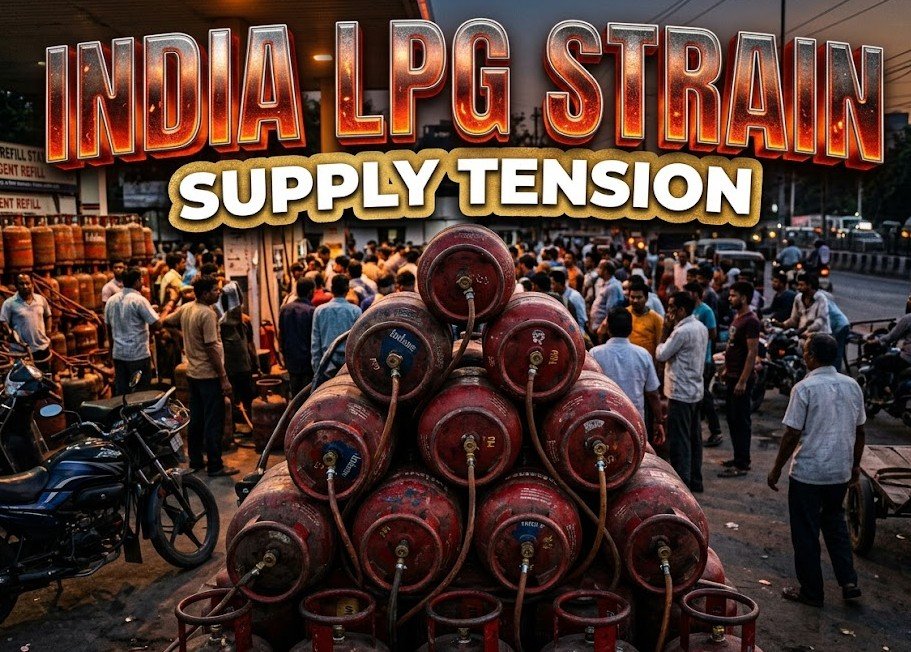
Despite assurances, the ground reality for many consumers tells a nuanced story. In cities like Mumbai, LPG deliveries have stretched up to seven days due to panic-driven booking surges and booking system glitches, according to local reports. This has added stress for households relying on timely delivery of cooking fuel.
Consumers are reporting long queues outside gas agencies, pressure on booking apps, and higher prices in informal markets due to hoarding. Some regions have even seen commercial LPG allocations sharply reduced to protect household supplies.
A contrasting update from Assam and Manipur confirms stable LPG supply there, with refinery output and stocks sufficient for at least 11 to 13 days of demand, suggesting regional differences in supply experiences.
Shift in Import Strategy to Protect Energy Security
India’s energy minister has highlighted significant changes in crude and LPG import patterns to cope with global disruptions. According to recent parliamentary statements, about 70 percent of India’s crude imports now come from routes that avoid the Strait of Hormuz, up from a lower percentage before the crisis. This reduces dependency on vulnerable shipping corridors.
Similar diversification is happening in LPG sourcing. Traditional dependency on Gulf suppliers—historically the primary exporters of cooking gas to India—is giving way to increased purchases from the United States, Norway, Canada, and Russia. These alternate sources provide a buffer against continued route interruptions in West Asia.
Government directives have urged refiners to maximize local LPG production and limit industrial and commercial sales. This prioritization reinforces household LPG flow even as upstream logistics face pressure globally.
Consumer Response and Daily Life Impact
The indifference between official assurance and everyday experience has triggered mixed reactions among consumers. Across social media and community forums, voices express frustration about delayed deliveries and distribution inconsistencies.
Some households reveal that despite statements of no shortage, distributors are citing limited supply and refusing bookings, prompting grievances and even formal complaints. Others warn that older booking intervals have been lengthened and services temporarily paused to contain surges in demand and prevent artificial scarcity.
In urban centers, small businesses and restaurants dependent on LPG cylinders are already feeling the pinch, either trimming menus or facing temporary closures due to reduced commercial gas supply. These impacts are more acute in areas without access to alternative fuels or piped natural gas infrastructure.
Government Pushes for Alternatives and Long Term Solutions
To ease pressure on cylinder demand, authorities are encouraging consumers who have access to piped natural gas to switch whenever feasible. Piped gas—already available to over 150 million Indian households—is being positioned as a stable alternative and longer-term solution to reduce dependency on imported LPG.
The government is also cracking down on hoarding and black marketing to ensure equitable distribution. Priority is being allocated to homes, hospitals, and essential services first, while sectors like hospitality and industry are asked to seek alternative fuels such as kerosene or biomass in the short term.
Energy market analysts underscore that while India’s oil, petrol, and diesel supplies remain secure due to diversified import routes, the LPG situation remains more sensitive due to its significant reliance on disrupted shipping lanes and faster consumption cycles among households.
The government’s message focuses on calm and cooperation, stressing that strategic planning and supply adjustments are ongoing to avert wider disruptions.
India is deeply connected to global energy markets, and sudden shocks such as the current geopolitical tensions highlight the delicate balance between stability, supply chains, and price dynamics. The unfolding situation will likely accelerate policy focus on diversification, resilient infrastructure, and alternative energy adoption among consumers.
As millions of Indian households navigate this period of constrained gas supplies and longer wait times for refills, the government’s call remains clear: avoid panic behaviors, support equitable distribution, and adopt piped gas where available.