The Gulf region’s reputation as a global business powerhouse has been shaken to its core after a wave of retaliatory strikes by Iran triggered unprecedented disruption to trade, travel, and financial markets across the Middle East. From Dubai’s iconic skyline to Kuwait’s trading floors, economic life in one of the world’s busiest business corridors ground to a near standstill, leaving executives, travelers, and investors facing extreme uncertainty and mounting losses.
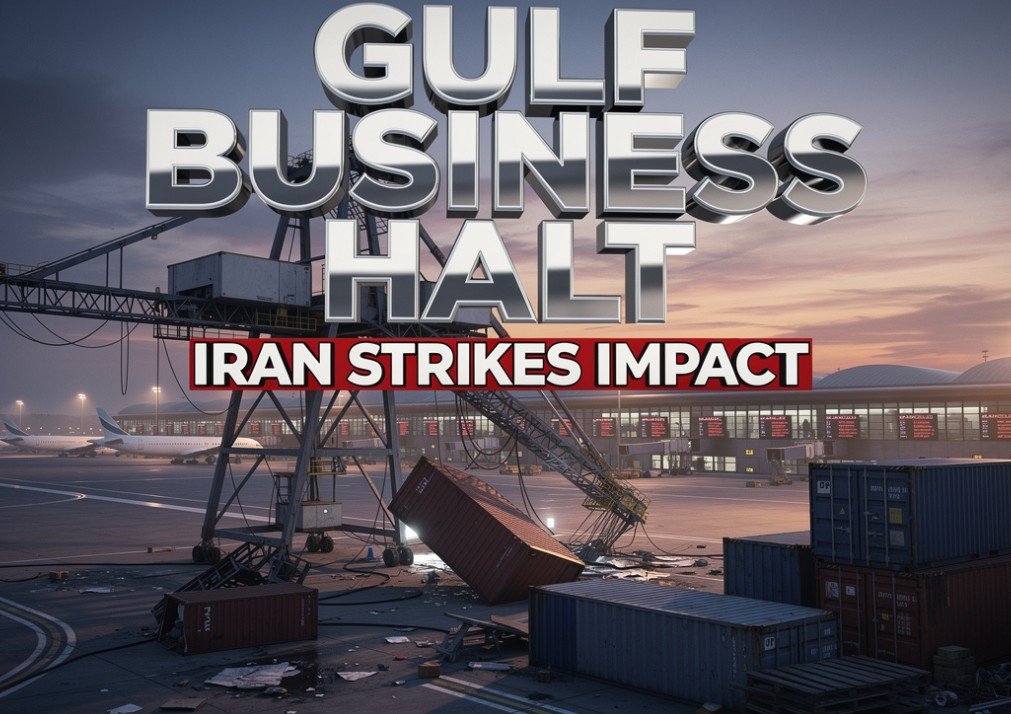
In a dramatic turn that echoes the earliest days of the pandemic, airports have closed, stock markets halted, and key ports stopped operations, putting millions of dollars of commerce on pause and raising broad questions about the future of business in the region.
Gulf Airports and Travel Networks Drop Off
The impact was first visible in the collapse of aviation activity, a cornerstone of Gulf economic growth. Major hubs such as Dubai International Airport, Abu Dhabi’s Zayed Airport and Doha’s Hamad International were either closed or severely restricted as countries shut airspace amid what airlines described as one of the worst disruptions in decades.
Passenger jets normally linking East and West flew empty corridors or were diverted, and carriers including Emirates, Etihad and Qatar Airways were forced to cancel or suspend thousands of flights, stranding travelers across continents and creating chaos in global itineraries.
Experts say this was not just a temporary blip. The region’s geographical position makes it a central hub for millions of travelers annually and any sustained closure is likely to ripple internationally. Airlines reliant on Gulf transit corridors were forced into costly reroutes, and travel firms are warning of longer trip times and price increases if the disruption persists.
For many businesses and passengers, even a short shutdown has felt deeply personal. Airports that usually hum with activity became echoes of past crises, with passengers stuck overnight and plans thrown into disarray as the conflict escalated.
Financial Markets Freeze and Slide
Beyond aviation, financial markets across the Gulf reacted violently. Investors fled risk assets, sending stock indices down sharply or forcing temporary closures.
In an extraordinary gesture, the Abu Dhabi Securities Exchange and Dubai Financial Market were ordered closed for two days to manage volatility and assess damage after sustained strikes affected confidence and asset valuations.
Elsewhere, Saudi Arabia’s benchmark index dropped more than four percent, Oman’s market slid, and Kuwait’s stock exchange suspended trading entirely following a wave of selling pressure.
Analysts say these moves reflect deep unease among global capital markets, which are judging not only the immediate physical impacts of the attacks but also the potential for a prolonged conflict that could disrupt oil flows and investor certainty.
Ports, Trade and Corporate Activity Freeze
Ports and logistics networks, often the backbone of Gulf trade, were hit as well. Damage at the Jebel Ali Port in Dubai caused fires and forced operational halts, while the global shipping industry grappled with uncertainties about routes and safety in contested waters.
This was compounded by the fact that the disruption unfolded during Ramadan, when corporate communities traditionally host key networking events at iftars and suhoors. Emails seen by Reuters show that major firms such as Emirates, Masdar and Mubadala cancelled significant business gatherings, depriving executives of vital opportunities to forge and maintain commercial ties.
For global supply chains that depend on Gulf trade hubs, the disruption arrived at a sensitive moment. Goods ranging from electronics to textiles transit through Gulf ports or aviation connectors, and extended closures or slowdowns could create bottlenecks in manufacturing and distribution worldwide. Analysts warn businesses should brace for cost increases and planning headaches if operations remain constrained.
Tourism and Real Estate Feel Immediate Shock
The shockwaves extended beyond trade and travel into softer but economically crucial sectors like tourism and real estate.
Dubai’s hospitality industry, which thrives on international visitors and high‑end hotel deals, saw cancellations surge and bookings evaporate overnight as safety concerns spiked and flights dried up. Luxury properties such as the Fairmont The Palm hotel sustained damage, a symbolic blow to the emirate’s image as a safe global leisure destination.
Analysts say visitors who planned events, conferences and high‑value stays typically expected to generate significant revenue in the early months of the year have instead walked away, leaving the sector looking at heavy short‑term losses.
The uncertainty also affects real estate investors who had been eyeing Gulf markets as diversifying gateways into global wealth portfolios. With travel corridors constrained and financial markets under pressure, many are reassessing near‑term commitments to the region.
Regional Economies Feel Mixed Impact
Not all economic signals are negative. Countries like Saudi Arabia and Qatar, which rely heavily on hydrocarbon exports, currently benefit from elevated oil prices that strengthen government revenues and fiscal positions. Higher oil prices can cushion some loss of activity by boosting export receipts and sovereign liquidity.
However, economists caution that this fiscal buffer does not offset the broader hit to trade, tourism and services sectors that fuel diversified Gulf economies. Extended conflict could push businesses to rethink investment, and international firms may delay or relocate major events as risk perceptions shift.
Broader Global Consequences
The cascading effects are not confined to the Gulf. Aviation delays and cancellations have left travelers worldwide stranded, with some reporting extended delays across Europe, Asia and Africa. Globally, airlines have had to adjust transcontinental schedules, reroute flights and absorb costs due to prolonged airspace closures.
The disruption also comes at a time when global energy markets are sensitive to supply risks. With the Gulf producing a significant share of the world’s oil, continued instability adds a geopolitical premium to prices, threatening inflationary pressures that ripple through consumer markets worldwide.
Financial institutions are watching closely. Some hedge funds and banks with significant footprints in the Gulf are already reviewing their presence and contingency plans in response to the instability, balancing personnel safety with client service demands in uncertain conditions.
What Comes Next?
For businesses across the Gulf, the current shutdown is an inflection point. Leaders say continuity planning, remote working arrangements and constant reassessment of risk will shape the next phase of operations. Local authorities in the UAE have advised companies to implement work‑from‑home policies through March 3 while safety assessments continue.
Trade analysts caution that while some sectors may bounce back quickly once operations resume, deeper structural shifts could emerge if the conflict drags on. Investment flows, supply chain strategies and aviation patterns may change permanently, leaving lasting marks on the region’s economic landscape.