Clean water is the foundation of public health, yet testing it has always been a dangerous waiting game. That changes today with a groundbreaking leap in environmental science. Researchers from Georgia Tech have officially moved their cutting-edge lab technology into the real world through Skopii, a new startup capable of detecting water contamination in minutes rather than days. This innovation promises to save lives and resources by bringing the power of a high-tech laboratory directly to the source.
The High Cost of Waiting for Answers
For decades, water quality monitoring has remained stuck in a slow and expensive cycle. Utility companies, food producers, and environmental agencies typically collect water samples and ship them to specialized off-site laboratories.
This process is fraught with risks.
Testing can take days or even weeks to yield results. During that critical window of silence, contamination can spread unchecked. People might consume unsafe water, or crops could be irrigated with dangerous pathogens. The delay forces decision-makers to react to past problems rather than preventing current ones.
Ameet J. Pinto, the Carlton S. Wilder Associate Professor in the School of Civil and Environmental Engineering at Georgia Tech, saw this flaw firsthand.
“We needed a way to quickly understand what was in a sample without investing days of lab work,” says Pinto, who co-founded Skopii to solve this exact issue.
His team realized that the existing tools were too stationary and costly for widespread use. Most water monitoring equipment costs tens of thousands of dollars. This price tag puts vital safety data out of reach for smaller communities and developing nations.
Bringing the Laboratory to the Source
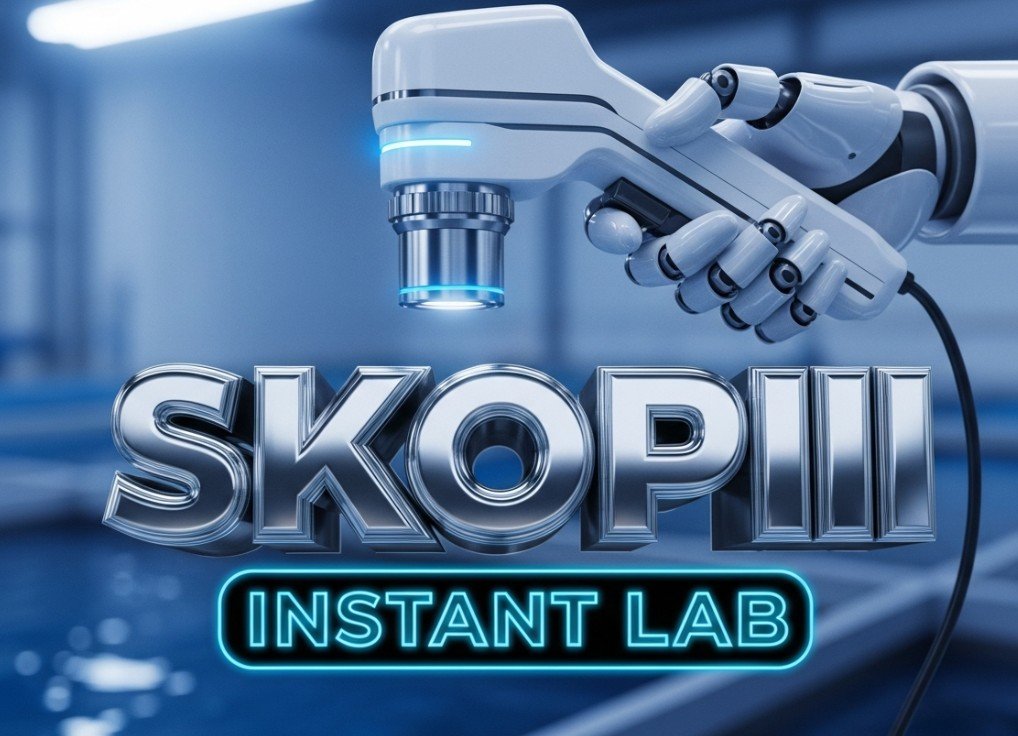
Skopii changes the equation by making microbiology visible and accessible instantly. The startup has developed a platform that combines a compact imaging device with sophisticated artificial intelligence.
It works like a digital eye.
Instead of waiting for a culture to grow in a petri dish, the device photographs the microscopic world within a water sample. The built-in AI then analyzes these images on the spot. It identifies bacteria and other microorganisms based on their visual characteristics.
This shift from biological culturing to digital imaging offers massive advantages:
- Speed: Operators get actionable data immediately.
- Portability: The device goes where the water is, from remote reservoirs to urban treatment plants.
- Simplicity: Users do not need a PhD in biology to interpret the results.
The transition from academic research to a market-ready product was driven by the urgent need for better data. Pinto and his team at the Pinto Lab spent years refining the technology. They wanted to ensure it was robust enough for the field but smart enough to rival lab results.
AI Intelligence Meets Environmental Science
The core power of Skopii lies in its artificial intelligence.
Microorganisms are notoriously difficult to identify just by looking at them. In a standard lab, scientists use expensive DNA sequencing to know exactly what is in the water. Skopii bypasses this by using machine learning models trained on thousands of microbial images.
The AI looks for specific patterns.
It recognizes the shape, size, and even behavior of the microbes present. This allows the system to flag potential contaminants or track changes in the water’s biological makeup over time.
The platform helps water utilities and industry partners understand the microbiology of their systems without the bottleneck of complex lab tests.
This capability is crucial for “engineered systems” like wastewater treatment plants. These facilities rely on good bacteria to clean water. If the balance of microbes shifts, the treatment process can fail. Skopii allows operators to monitor this balance in real time and adjust their operations before a failure occurs.
| Feature | Traditional Lab Testing | Skopii Platform |
|---|---|---|
| Time to Result | 2-7 Days | Real-time / Minutes |
| Location | Off-site Specialized Lab | On-site / Portable |
| Cost | High per sample | Low operational cost |
| Expertise Needed | Trained Microbiologist | Field Technician |
A New Era for Global Water Security
The launch of Skopii marks a significant milestone for the commercialization of academic research.
Pinto also serves as the faculty director for Interdisciplinary Research and Collaboration at the Brook Byers Institute for Sustainable Systems. His dual role highlights a growing trend where university innovations are rapidly translated into commercial solutions to address climate and health challenges.
The impact extends beyond just drinking water.
Food production facilities can use this tech to test irrigation water instantly, preventing outbreaks of E. coli or Salmonella on farm produce. Environmental teams can monitor rivers and lakes for harmful algal blooms before they become toxic to wildlife and humans.
By removing the barrier of cost and complexity, Skopii effectively democratizes water safety.
Smaller municipalities that previously could not afford frequent testing can now monitor their water supply daily. This proactive approach is essential as climate change puts more stress on global water systems, making contamination events more frequent and unpredictable.
Technology like this transforms water quality from a reactive guessing game into a proactive science. It empowers communities to protect themselves with data that is fast, accurate, and accessible.
The days of waiting weeks to know if your water is safe are finally coming to an end. Skopii has arrived to give us the vision we have been missing.