A measles case has been confirmed in coastal Georgia, involving an infant too young for routine vaccination. State health officials say the infection was linked to international travel, triggering an urgent effort to track possible exposures and limit further spread.
The case marks Georgia’s first measles report of 2026 and arrives as public health teams stress vigilance, especially for families with young children.
A rare but serious case raises early-year concern
The Georgia Department of Public Health, often called DPH, confirmed the case on January 12. The patient is a baby who lives in the Coastal Health District and is younger than the recommended age for routine measles vaccination.
According to DPH, the child contracted the virus while traveling internationally with family. That detail matters, actually, because measles remains common in parts of the world where vaccination coverage is uneven.
Health officials are now working to identify anyone who may have been exposed through close contact with the infant.
This includes people who shared indoor spaces during the period when measles can linger in the air or on surfaces, sometimes long after an infected person has left the room.
Measles is rare in Georgia, but when it appears, it moves fast.
Why measles spreads so easily, even without close contact
Measles is one of the most contagious viruses known. It spreads through respiratory droplets when an infected person coughs, sneezes, or even breathes in enclosed spaces.
The virus can remain suspended in the air or on surfaces for up to two hours. That means exposure can happen without direct interaction, which surprises many people.
DPH officials say this airborne persistence is what makes contact tracing so urgent and, frankly, stressful for health teams.
Once exposed, symptoms usually appear between seven and 14 days later.
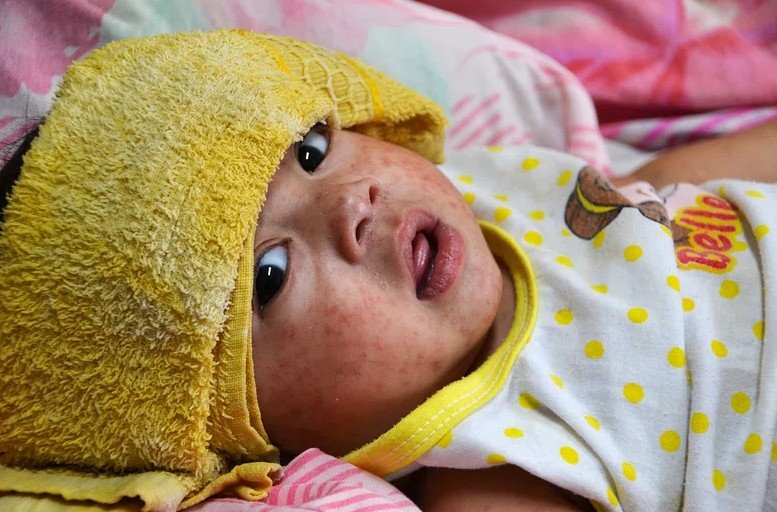
Typical early signs include fever, cough, runny nose, and watery eyes. A red, blotchy rash follows, starting on the face and spreading downward across the body.
For infants, older adults, and people with weakened immune systems, complications can be serious.
What parents and caregivers should watch for right now
Public health officials are urging families in coastal Georgia to stay alert for symptoms, especially if they or their children recently traveled or were in busy indoor settings.
Basically, measles doesn’t always announce itself right away.
Here are key points health officials want the public to keep in mind:
-
Symptoms can appear up to two weeks after exposure, not immediately
-
The rash usually comes after fever and cold-like signs
-
People can spread measles before they realize they are sick
Anyone who suspects measles should call a healthcare provider before visiting a clinic or hospital. Showing up unannounced can expose others, which is the last thing anyone wants.
Healthcare providers who suspect a measles case are required to notify public health authorities immediately.
The role of vaccination and why timing matters
The measles, mumps, and rubella vaccine, widely known as the MMR vaccine, remains the most effective way to prevent measles.
According to guidance from the Centers for Disease Control and Prevention, children should receive their first MMR dose between 12 and 15 months of age. A second dose is recommended between ages four and six.
For infants aged six to 11 months who are traveling internationally, the CDC recommends a single early dose before travel. That early dose does not replace the standard schedule, so two additional doses are still needed after the first birthday.
Vaccination effectiveness is well established.
More than 95 percent of people develop immunity after one dose. A second dose raises protection to about 98 percent.
Vaccinated individuals also help protect those who cannot be vaccinated yet, including newborns and people with certain medical conditions.
That community effect is quiet, but it’s huge.
How Georgia’s recent measles history puts this case in context
While measles cases remain uncommon in Georgia, they are not unheard of.
In 2025, the state recorded 10 confirmed measles cases. That figure stayed well below national outbreak levels seen in some earlier years, but it still kept public health teams busy.
This new case is the first reported in Georgia in 2026.
Health officials say a single case does not mean an outbreak is underway, but it does raise the stakes early in the year, especially with ongoing global travel.
Basically, measles doesn’t respect borders.
A quick snapshot of measles risk and prevention
To put things in perspective, here is a simple overview based on public health guidance and historical data:
| Area | Key Information |
|---|---|
| Transmission | Airborne, can linger up to 2 hours |
| Symptom onset | 7–14 days after exposure |
| First Georgia case in 2026 | Confirmed January 12 |
| Georgia cases in 2025 | 10 confirmed |
| Vaccine protection | ~95% after one dose, ~98% after two |
The numbers are small, but the virus itself packs a punch.
Public health response moves quietly but quickly
DPH says it is continuing contact tracing and monitoring for additional cases. That work often happens behind the scenes, phone calls, timelines, lists of places visited.
It is not dramatic, but it is essential.
The agency has also reminded healthcare providers across the state to review measles protocols, especially screening procedures for patients with fever and rash.
For now, officials say there is no need for panic. Awareness and early action are the priorities.