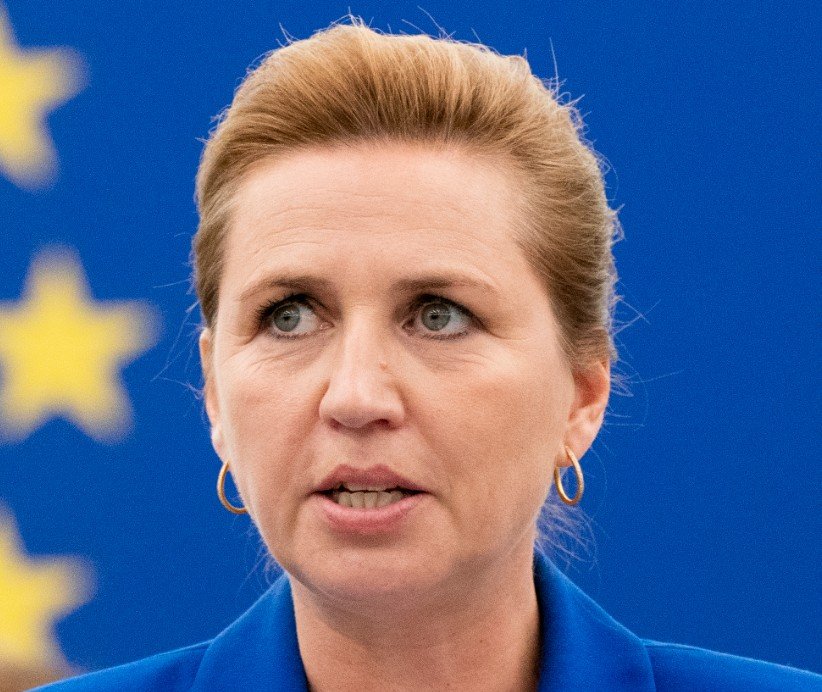
Denmark’s Prime Minister Mette Frederiksen issued a strong rebuke on January 4, 2026, telling the United States to stop its threats of annexing Greenland. This came after President Donald Trump and a close adviser’s wife revived calls for U.S. control over the strategic Arctic territory, amid rising tensions following recent U.S. military actions in Venezuela.
The statement from Frederiksen highlighted growing friction between the NATO allies, as Trump emphasized Greenland’s importance for American defense needs. Officials and experts say this dispute could strain international relations at a time when global security concerns are already high.
Trump’s Latest Comments Spark Outrage
President Trump reignited the debate in a January 4 interview with The Atlantic, where he stated that the U.S. “absolutely” needs Greenland for national defense. He pointed to its vast mineral resources and prime location in the Arctic, which could counter growing influences from China and Russia in the region.
This is not the first time Trump has expressed interest in acquiring Greenland. During his first term, he proposed buying the island from Denmark, a move that was swiftly rejected. Now, with his return to office, the rhetoric has escalated, especially after Katie Miller, wife of Trump’s deputy chief of staff Stephen Miller, posted an image on X showing the U.S. flag over Greenland with the caption “SOON.”
Experts note that Greenland’s melting ice due to climate change has exposed valuable rare earth minerals, making it a hotspot for global powers. Recent data from the U.S. Geological Survey shows Greenland holds about 10 percent of the world’s known reserves of these critical materials, essential for electronics and renewable energy tech.
The timing of these comments follows U.S. strikes on Venezuela and the reported abduction of its president, Nicolas Maduro, on January 3, 2026. Analysts suggest Trump may be using bold foreign policy moves to assert dominance early in his term.
Denmark’s Prime Minister Fires Back
Mette Frederiksen, Denmark’s leader, did not hold back in her response. In a public statement on January 4, she declared that the U.S. has “no right to annex any of the three nations in the Danish kingdom,” referring to Denmark, Greenland, and the Faroe Islands.
She urged Trump and his allies to cease the threats against a close NATO partner. Frederiksen stressed the importance of mutual respect and territorial integrity, warning that such talk undermines alliance stability.
Denmark’s ambassador to the U.S., Jesper Møller Sørensen, echoed this sentiment on social media, calling for full respect of Denmark’s sovereignty. Greenland’s own Prime Minister, Jens-Frederik Nielsen, joined in, affirming that “Greenland belongs to the Greenlanders.”
Frederiksen also mentioned in a New Year’s address days earlier that Denmark is ramping up its military spending significantly, the fastest increase in its history, partly in response to Arctic security concerns.
Background on Greenland’s Strategic Value
Greenland, the world’s largest island, is an autonomous territory within the Kingdom of Denmark. It gained self-rule in 2009 but relies on Denmark for foreign affairs and defense.
The U.S. already has a military presence there through Thule Air Base, established during World War II. This base plays a key role in missile defense and space surveillance, according to Pentagon reports.
Recent events have heightened interest:
- Climate change is opening new shipping routes in the Arctic, potentially shortening trade paths between Europe and Asia by up to 40 percent, per a 2025 Arctic Council study.
- China’s investments in Greenland’s mining sector have raised alarms in Washington, with U.S. officials accusing Beijing of seeking undue influence.
- Russia’s military buildup in the Arctic, including new bases and submarine activities, has prompted NATO to increase patrols in the region.
A table below outlines key facts about Greenland’s resources and strategic importance:
| Aspect | Details |
|---|---|
| Population | About 56,000 people, mostly Inuit |
| Key Resources | Rare earth minerals, zinc, iron ore; potential oil and gas reserves |
| Economic Ties | Annual block grant from Denmark of around $500 million |
| Military Presence | U.S. Thule Air Base; Danish oversight |
| Climate Impact | Ice melt rate increased 20% since 2020, exposing new land and resources |
This data underscores why superpowers view Greenland as a prize, but locals prioritize environmental protection and autonomy.
International Reactions and Broader Implications
Allies and observers have weighed in on the spat. European Union officials expressed concern over potential rifts in NATO, with one anonymous source telling reporters that Trump’s approach feels “aggressive and confrontational.”
Posts on social media platforms reflect public sentiment, with many users criticizing the U.S. stance as outdated colonialism. For instance, global discussions highlight how such threats could alienate partners at a time when unity is needed against common threats like cyber attacks and territorial disputes.
The dispute ties into larger 2026 trends, including Trump’s aggressive foreign policy. After the Venezuela operation, some fear similar interventions elsewhere. Experts from think tanks like the Brookings Institution warn that pushing for annexation could lead to diplomatic isolation for the U.S.
On the flip side, supporters of Trump’s view argue it strengthens American security. A recent poll by Pew Research Center in December 2025 showed 45 percent of Americans support exploring ways to increase U.S. influence in Greenland, up from 30 percent in 2019.
What This Means for Global Alliances
The Greenland issue tests the limits of alliances in a multipolar world. Denmark has vowed to boost its Arctic defenses, including new icebreakers and surveillance tech, with a 2026 defense budget increase of 25 percent.
For the U.S., pursuing annexation could complicate relations with other NATO members, who value sovereignty. Legal experts point out that international law, including the UN Charter, prohibits forcible annexation.
Possible outcomes include:
- Diplomatic talks to enhance U.S. investments without ownership changes.
- Increased NATO exercises in the Arctic to address shared concerns.
- Potential referendums in Greenland on greater independence, as local leaders have discussed in recent years.
As tensions simmer, both sides may seek dialogue. Frederiksen has indicated openness to U.S. investments that respect Greenland’s autonomy.
This story continues to develop, with potential impacts on trade, security, and environmental policies. Share your thoughts in the comments below or spread the word on social media to keep the conversation going.