Several Russian citizens have reported being denied entry into Georgia after border officials flagged a single detail in their foreign passports, an issue that appears to be spreading as the New Year travel rush collides with unresolved political tensions between Moscow and Tbilisi.
The refusals, described by travelers as sudden and confusing, center on the place of birth listed in Russian passports.
Passport Details Become the Deciding Factor
According to reports shared by the Telegram channel “Roof of the Tourist House,” Georgian border authorities are paying close attention to the birthplace column in Russian foreign passports. Travelers whose documents list Crimea or Lugansk as their place of birth are being turned away at the border.
The channel, citing unnamed sources, said the problem has become widespread rather than isolated. What began as a few incidents has now turned into a pattern, catching travelers off guard, especially those arriving by air during the holiday period.
For affected passengers, there is often no further explanation beyond the passport stamp itself.
One sentence captures the mood: people are stunned when they realize a line they didn’t think twice about is now decisive.
New Year’s Eve Flights End in Refusal
The issue drew particular attention after reports emerged from a New Year’s Eve flight to Batumi, a popular Black Sea resort city in Georgia. Several passengers on that flight were denied entry despite having valid travel documents and return tickets.
A friend of the travelers told the Telegram channel that six passengers were stopped and refused admission.
All of them, according to the account, had either Crimea or Lugansk listed as their place of birth in their passports. The passengers were reportedly traveling to meet family members, including children, for the holidays.
Instead of celebrations, they spent the night dealing with border procedures.
No official explanation was given to them at the time, beyond the implication that the passport detail itself was the problem.
Why Birthplace Matters Now
Georgia has long maintained a strict stance regarding territories it considers occupied or disputed. Crimea, annexed by Russia in 2014, and Lugansk, one of the eastern Ukrainian regions claimed by Moscow, remain highly sensitive topics in Georgian foreign and security policy.
For Georgian authorities, recognition issues matter. Accepting documents that list these regions as part of Russia can be seen as indirectly legitimizing territorial claims Georgia does not recognize.
That sensitivity appears to be playing out at border checkpoints.
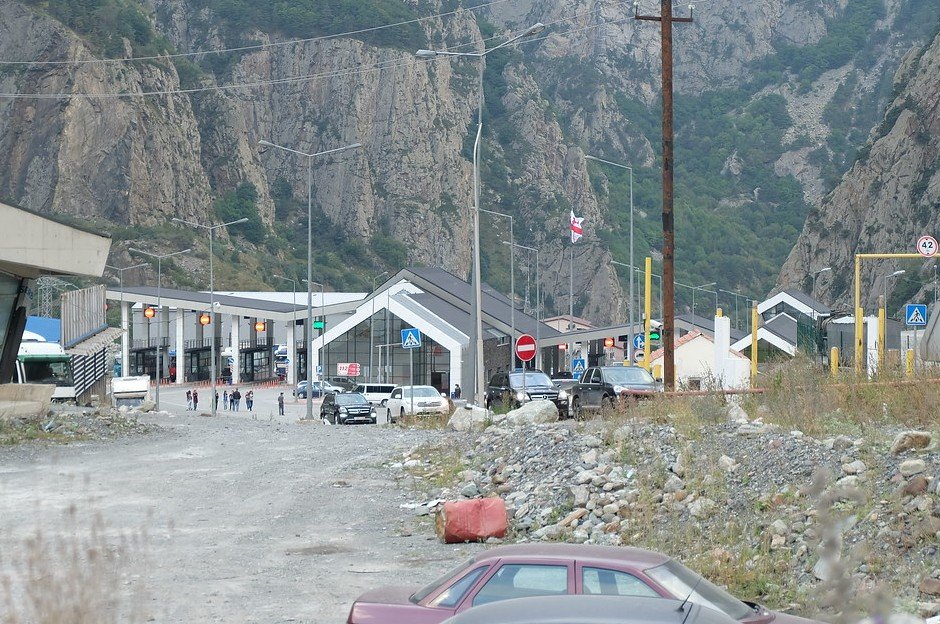
Travelers say the rules are not clearly spelled out beforehand, leaving people unaware that a birthplace entry could block their journey entirely.
Basically, it’s not about where you live now. It’s about what your passport says you were born in.
A Growing Pattern, Not an Isolated Case
The Telegram channel emphasized that the refusals are no longer rare. Multiple travelers across different entry points have shared similar stories, suggesting a consistent approach rather than random enforcement.
Some of those turned away are Muscovites who have lived in central Russia for decades. Others were born in Crimea or Lugansk during the Soviet period, long before the current political disputes.
That detail adds another layer of frustration.
People argue they have no control over where they were born, and that the designation in their passport reflects Russian administrative practices, not a political statement by the individual.
Yet at the border, nuance doesn’t seem to matter much.
Georgia’s Broader Border Policy Context
Georgia has, for years, maintained tighter scrutiny of Russian citizens entering the country, especially during periods of heightened regional tension. While many Russians continue to travel to Georgia without incident, entry has never been guaranteed.
Officially, Georgia reserves the right to deny entry to foreign nationals without detailed explanation, a practice common worldwide.
Still, the apparent focus on birthplace records marks a shift in how those decisions are being applied, at least from the perspective of travelers.
There has been no immediate public statement from Georgian border authorities directly addressing these recent reports. Silence, in this case, is adding to the uncertainty.
Impact on Families and Holiday Travel
The timing has amplified the emotional toll. New Year’s Eve and early January are peak travel periods, especially for families hoping to reunite after long separations.
In the Batumi case, travelers were reportedly headed to see their children.
Instead, they faced last-minute refusals, rebookings, and forced returns, often at personal expense. Airlines typically consider such cases as entry denials rather than flight disruptions, meaning compensation is rare.
One traveler summed it up in a single line shared online: you plan for joy, and you get bureaucracy.
That sense of helplessness runs through many of the accounts.
What Travelers Are Saying Online
Social media and messaging platforms have filled the gap left by the absence of official guidance. Russian travelers are now warning each other to check passport details carefully before booking trips to Georgia.
Some are advising people born in Crimea or Lugansk to expect problems, regardless of their current residence or purpose of travel.
Others are questioning whether alternative documents or explanations could help. So far, there’s little evidence that appeals at the border are successful.
Once the refusal is issued, the decision appears final.
Diplomatic Silence, Practical Consequences
The reports come at a time when relations between Russia and Georgia remain strained, shaped by unresolved conflicts and regional security concerns.
While the issue may not rise to the level of a diplomatic dispute, it highlights how geopolitics can filter down into everyday travel decisions.
A single passport line becomes a proxy for much larger disagreements.
For ordinary people, that translates into canceled plans and unexpected barriers.
And for now, there’s no clear indication that the situation will ease soon.
Uncertainty Ahead for Future Travel
Without formal clarification from Georgian authorities, Russian citizens are left guessing how strictly the rule will be enforced going forward.
Will it remain limited to certain entry points? Will it expand further? Or will clearer guidance emerge?
At the moment, travelers are relying on word of mouth and Telegram channels rather than official notices.