Space missions don’t always end when the headlines fade. Long after Chandrayaan-3’s historic landing, its propulsion module quietly drifted through space — until the Moon stepped in, reshaping its path in a subtle but fascinating celestial encounter.
A mission chapter that quietly kept going
When Indian Space Research Organisation wrapped up the primary goals of Chandrayaan-3, most eyes stayed fixed on the Vikram lander and Pragyan rover. The propulsion module, having done its job, was left behind.
ISRO placed it in a wide Earth orbit, one that stretched far enough to brush past the Moon’s gravitational neighbourhood. On paper, that orbit looked stable. In reality, it was an open invitation to orbital mischief.
The module wasn’t powered anymore. No corrections. No burns. Just gravity doing its thing.
And gravity, especially the Moon’s, rarely plays by human expectations.
A tweet that caught astronomers’ attention
On December 30, 2025, astronomer Jonathan McDowell dropped a quietly explosive observation on X.
He noted that the “abandoned Chandrayaan-3 propulsion module” had experienced what he described as “a bit of a tussle with the Moon” in November. The result? A dramatically altered orbit.
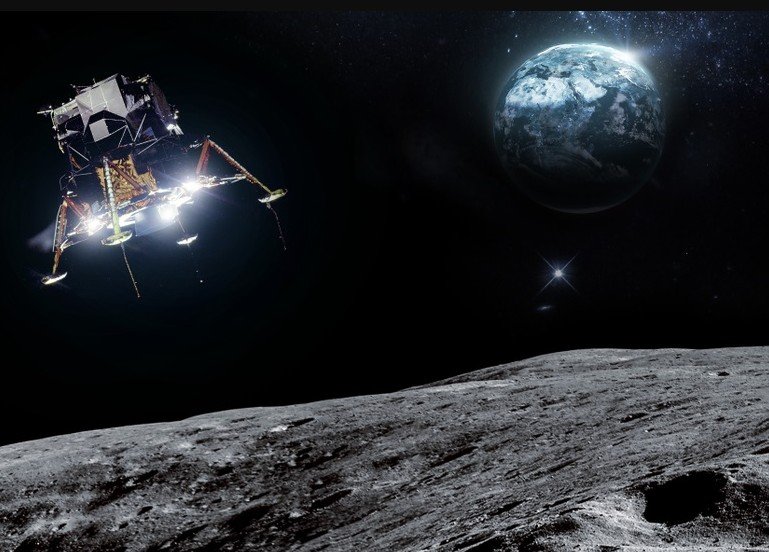
Originally, the module sat in a 125,000 km x 305,000 km Earth orbit. After the lunar encounter, it was tracked in a much wider 365,000 km x 983,000 km, tilted at about 22 degrees.
That’s not a small change. That’s the Moon giving space hardware a gentle, unstoppable shove.
McDowell isn’t just any observer. He maintains the General Catalog of Artificial Space Objects and publishes Jonathan’s Space Report, a deeply detailed chronicle of spaceflight history. When he notices something odd, people listen.
So what actually happened up there?
This wasn’t a collision. No sparks. No damage.
What occurred was a gravitational interaction, something space agencies understand well but can’t always fully control once a spacecraft is left unattended.
As the propulsion module’s orbit grazed lunar space, the Moon’s gravity tugged on it. That pull altered its velocity and direction just enough to reshape the orbit around Earth.
Think of it like a slow-moving car drifting too close to a massive truck. No contact, but the airflow alone nudges it sideways.
In space, gravity replaces airflow.
And once that nudge happens, there’s no undo button.
Why ISRO left the module where it was
Some might wonder why ISRO didn’t send the propulsion module crashing into the Moon or deorbit it safely. The answer lies in fuel, risk, and opportunity.
The module had already delivered the Vikram lander into lunar orbit. Its remaining fuel was limited, and engineers chose a passive end-of-mission plan.
Leaving it in a high Earth orbit offered a few advantages:
-
No risk of accidental lunar impact
-
Minimal space debris concerns
-
A chance to observe long-term orbital behaviour
At the time, the orbit was considered benign. But space is a three-body problem waiting to happen. Earth, Moon, spacecraft. Throw in time, and surprises are almost guaranteed.
An unintended lesson in celestial mechanics
Ironically, this unexpected orbit shift has become a real-world demonstration of orbital physics textbooks love to talk about.
The Moon’s gravity constantly reshapes the space around Earth. Satellites in high, elongated orbits are especially vulnerable to these nudges.
What makes Chandrayaan-3’s case interesting is how cleanly it illustrates the effect.
No engines fired.
No commands sent.
Just gravity, slowly rewriting the trajectory.
For scientists tracking space objects, it’s a reminder that “abandoned” doesn’t mean “inactive.”
Does this pose any risk?
Short answer: no immediate danger.
The propulsion module remains in a stable, though wider, Earth orbit. It’s not on a collision course with Earth or the Moon, and it’s being tracked.
In fact, objects in such high orbits often stay there for years, sometimes decades, before natural perturbations send them elsewhere.
ISRO hasn’t indicated any concern, and there’s no suggestion of corrective action. At this stage, the module is more a cosmic drifter than a threat.
Still, every tracked object adds to the growing challenge of space traffic management.
Why this matters beyond Chandrayaan-3
This episode quietly highlights a bigger issue facing space agencies worldwide.
As missions multiply and hardware accumulates beyond low Earth orbit, managing long-term trajectories becomes trickier. The Moon’s influence, solar gravity, and even pressure from sunlight can alter paths over time.
For future lunar missions, especially those involving staging points or space stations, understanding these effects isn’t academic. It’s practical.
Chandrayaan-3’s propulsion module has, unintentionally, become a teaching aid.
It shows that space doesn’t freeze once a mission ends. It keeps moving. Pulling. Adjusting.
A quiet afterlife in space
There’s something poetic about it.
A spacecraft built to deliver India’s ambitions to the Moon now drifts between Earth and lunar space, shaped by the same forces it once helped navigate.
Just gravity, time, and a silent machine tracing an unexpected path across the sky.
For those watching carefully, it’s a reminder that space exploration doesn’t always end with a landing. Sometimes, the most interesting stories begin after everyone stops looking.