Georgian civil society groups are asking the United Nations to step in after authorities failed, they say, to properly investigate claims that chemical agents were used against protesters in Tbilisi. The appeal raises fresh concerns about policing, public health, and human rights in the country.
NGOs say domestic probes fell short
The call came in a joint appeal signed by twelve Georgian non-governmental organisations, sent to the UN’s Organisation for the Prohibition of Chemical Weapons, better known as the OPCW.
In plain terms, the groups argue that Georgia’s own institutions didn’t do the job.
They say investigations into alleged chemical exposure during pro-European protests in November and December 2024 were neither independent nor effective, leaving victims without answers and the public with doubts.
For the NGOs, this is basically the end of the road at home.
They insist that only an international mission, operating outside Georgia’s political pressures, can establish what substances were used and whether international law was breached.
One paragraph in the statement sums up their position bluntly: without outside scrutiny, the truth may never surface.
What allegedly happened during the Tbilisi protests
The materials submitted to international bodies cover at least seven separate incidents during the demonstrations in Tbilisi late last year.
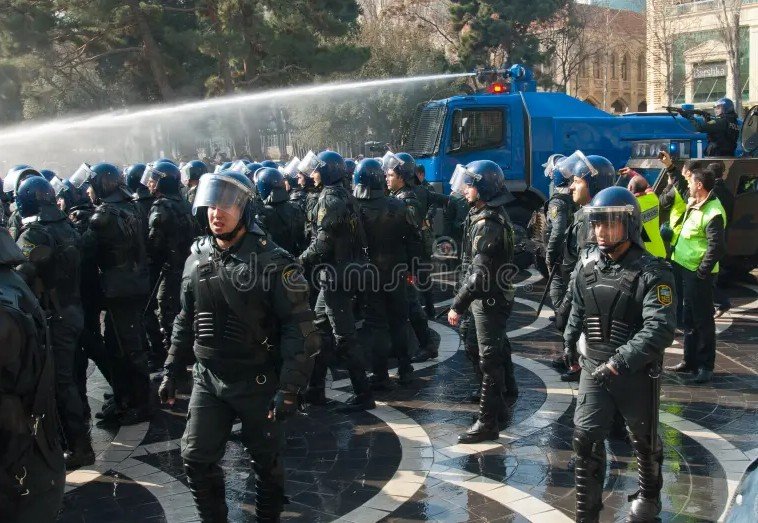
According to the NGOs’ assessment, police units used water cannons laced with chemical substances, alongside other compounds that remain unidentified or were described as experimental.
Witness accounts, video recordings, and medical documentation suggest the effects went far beyond short-term irritation.
Protesters reported breathing difficulties, burning sensations on the skin, and sudden vision problems during dispersal operations.
And then there’s what happened later.
Doctors documented lingering symptoms days and even weeks after exposure, which the NGOs argue is a red flag when it comes to crowd-control agents.
In their words, these were not just “tear gas and move on” situations.
They describe outcomes that don’t neatly fit within accepted policing standards.
Health impacts that didn’t fade quickly
Medical evidence is a big part of the NGOs’ case.
They say affected individuals suffered acute respiratory disorders that didn’t simply disappear once the protests ended.
Some protesters experienced chemical burns, while others reported nervous system symptoms, including numbness and coordination issues.
Vision problems were also reported, in some cases lasting far longer than expected.
Here’s what the NGOs highlight as especially troubling:
-
Symptoms persisted long after exposure, according to medical examinations
-
Multiple victims required follow-up treatment rather than brief first aid
-
Effects appeared inconsistent with standard, approved crowd-control agents
One sentence in the appeal stands out for its simplicity: these health outcomes were not normal.
That, the groups argue, raises serious questions about what exactly was sprayed and how it was deployed.
A former officer’s claim adds fuel to concerns
Public attention intensified after a former officer from Georgia’s interior ministry spoke to the media.
He claimed that a toxic chemical agent had been tested as early as 2009, or even earlier, but was deemed too dangerous at the time.
His remarks suggested that the substance resurfaced during the 2024 protests, despite earlier internal concerns about its safety.
The former officer alleged that the compound caused severe reactions and was never meant for use in public-order operations.
That claim hasn’t been officially confirmed.
Still, NGOs say it strengthens the case for an external investigation, especially since whistleblowers and witnesses now face legal and political pressure.
International law and human rights questions
The NGOs didn’t limit their appeal to the OPCW alone.
They also contacted UN special rapporteurs and the Council of Europe’s commissioner for human rights, asking them to act within their mandates.
Their argument rests on international obligations Georgia has already accepted.
If chemical substances were used in ways that caused lasting harm, they say, that could breach both human rights standards and international conventions.
The OPCW, tasked with enforcing the Chemical Weapons Convention, is seen as uniquely positioned to assess whether banned or restricted substances were involved.
One short paragraph in the appeal puts it this way: domestic silence does not cancel international responsibility.
That line has been widely shared online.
Pressure grows amid criticism of authorities
Human rights groups say the state response so far has been defensive rather than transparent.
Instead of opening broad, independent probes, authorities have questioned the credibility of experts, witnesses, and activists who spoke to international media.
Some of those individuals now face charges linked to what officials describe as “hostile activity.”
Amnesty International has already weighed in, urging an investigation into the use of “kamit,” a chemical agent mentioned in reports, and calling for an embargo on police equipment supplied to Georgia until clarity is achieved.
That demand has added another layer of pressure on Tbilisi.
For the NGOs behind the UN appeal, the issue is bigger than one protest season.
They warn that without accountability, similar tactics could be used again, quietly and without consequence.
Their message to international bodies is simple, almost weary: someone has to look, properly, before this story fades away.