San Francisco was jolted into darkness Saturday afternoon after a major power outage swept across the city, leaving tens of thousands without electricity. The blackout struck during a peak holiday shopping weekend, freezing traffic, closing stores, and exposing just how fragile urban infrastructure can be.
For hours, the city slowed to a crawl.
Shortly after 1 p.m., lights flickered out across neighborhoods, phones buzzed with alerts, and businesses scrambled to respond. By nightfall, much of San Francisco felt eerily still, lit only by car headlights and emergency strobes.
A substation fire at the heart of the failure
City officials quickly pointed to a single triggering event.
According to authorities and utility officials, the outage was caused by a fire at a Pacific Gas and Electric Company substation near the intersection of 8th and Mission streets. The fire damaged key electrical equipment, setting off a chain reaction that knocked out power across multiple neighborhoods.
The damage, PG&E said, was not minor.
In a statement, the utility described the destruction as “significant and extensive,” noting that repairs were far more complicated than a routine outage fix. Fire crews secured the area while engineers assessed how deeply the systems had been affected.
One sentence from officials captured the gravity: this wasn’t a simple breaker flip.
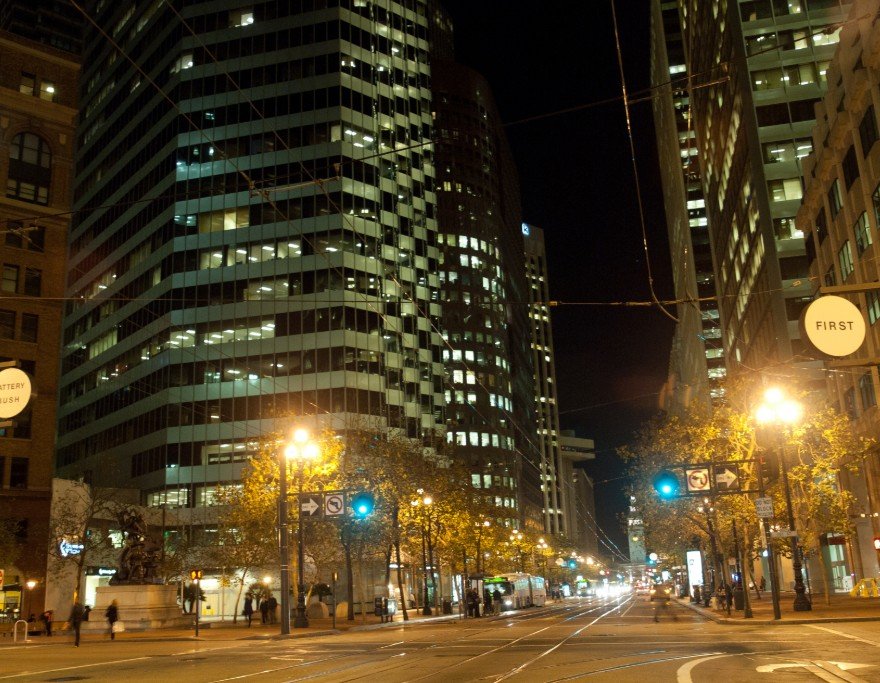
How widespread the outage became
At its peak, the blackout affected roughly 130,000 homes and businesses in a city of just over 800,000 people.
Entire commercial corridors went dark. Residential blocks lost heat and lighting. Cell service remained mostly intact, but many Wi-Fi networks vanished, adding to the sense of dislocation.
By early Sunday morning, power had been restored to about 110,000 customers. Still, nearly 21,000 remained without electricity, waiting as repair crews worked through the night.
PG&E mobilized additional engineers and electricians from across the region. Even so, officials said they could not offer a precise timeline for full restoration.
For many residents, the uncertainty was the hardest part.
Holiday weekend chaos across the city
The timing could hardly have been worse.
The blackout hit during one of the busiest shopping weekends of the year, with holiday crowds filling downtown streets and neighborhood retail hubs. When the power dropped, registers shut down instantly. Restaurants lost refrigeration. Small businesses locked their doors and sent customers home.
Traffic quickly turned chaotic.
With signals dark across wide sections of the city, police officers were dispatched to manually direct vehicles at major intersections. Horns blared. Tempers flared. Commutes stretched far longer than usual.
The San Francisco Department of Emergency Management urged residents to avoid non-essential travel and to stay clear of downed lines or damaged infrastructure.
One shop owner summed it up bluntly: “It felt like the city just hit pause.”
Inside PG&E’s response and repair challenge
PG&E crews faced a layered problem.
Substations are complex hubs, designed to distribute power safely across dense urban grids. When one fails violently, as this one did, restoring service isn’t as simple as rerouting electricity. Equipment must be inspected, tested, and in some cases rebuilt before power can flow again.
Officials said the fire caused cascading failures, meaning systems designed to protect the grid shut down additional circuits to prevent further damage. That safety feature, while necessary, expanded the scope of the outage.
In a brief update, PG&E said:
-
The substation fire damaged multiple components
-
Repairs required specialized equipment and crews
-
Power restoration would happen in stages, not all at once
For residents watching the hours tick by, those technical explanations offered little comfort.
Daily life under sudden darkness
As evening fell, San Francisco took on an unfamiliar look.
Pedestrians navigated dim sidewalks using phone flashlights. Apartment buildings glowed with candles in windows. In some neighborhoods, residents gathered outside, swapping updates and rumors about when power might return.
Hospitals and critical facilities switched to backup generators. Most remained operational, though officials acknowledged that prolonged outages always increase risk.
Public transit was disrupted but not fully halted. Some systems ran on backup power, while others reduced service. Ride-hailing apps surged with demand, driving up wait times and prices.
A single sentence kept surfacing online: “This doesn’t feel like San Francisco.”
Broader questions about infrastructure resilience
The outage has reignited a familiar debate in California.
How resilient is the state’s aging power infrastructure, especially in dense urban centers?
PG&E has faced years of scrutiny over grid maintenance, wildfire-related shutdowns, and system reliability. While officials emphasized that this incident was localized and accidental, critics argue it highlights ongoing vulnerabilities.
Energy experts note that substations built decades ago now carry heavier loads than originally designed. Add climate stress, rising demand, and urban density, and the margin for error shrinks.
City leaders have not yet indicated whether an independent review will follow, but several said lessons must be learned.
One council member described the outage as “a warning shot.”
What happens next for San Francisco
As power gradually returned, cleanup and assessment began.
Fire investigators continued examining the substation site to determine what exactly ignited the blaze. PG&E said it would cooperate fully with any inquiries and pledged to review safeguards at similar facilities.
For residents and business owners, attention turned to losses. Spoiled food. Missed sales. Interrupted services. Many will file insurance claims. Others will simply absorb the hit.
By Sunday morning, the city was moving again, though unevenly.
Lights blinked back on. Traffic normalized. Stores reopened. But the memory of sudden darkness lingered.
San Francisco has weathered earthquakes, fires, and storms. This outage was smaller in scale, yet deeply disruptive. It reminded a modern, tech-driven city how quickly daily life depends on unseen systems humming quietly in the background.