The Moon is slipping quietly toward its darkest phase. On December 15, skywatchers will notice a thinner glow than usual, with only a small slice of lunar light visible before the Moon fades almost entirely in the coming nights.
For anyone stepping outside after sunset, this is one of the last decent chances to spot surface details before the New Moon arrives.
Tonight’s moon phase explained
As of Monday, December 15, the Moon is in its Waning Crescent phase.
That means only about 18% of the lunar surface is illuminated, according to NASA’s Daily Moon Observation data. Each night from here, the visible portion will continue to shrink as the Moon moves closer to lining up between Earth and the Sun.
The Waning Crescent typically rises late at night and is best seen in the early morning hours before sunrise. By evening, it can already feel faint, almost shy, especially if city lights are nearby.
This phase often feels quieter than others. Less dramatic. Still, it has its own subtle charm.
What you can actually see in the sky tonight
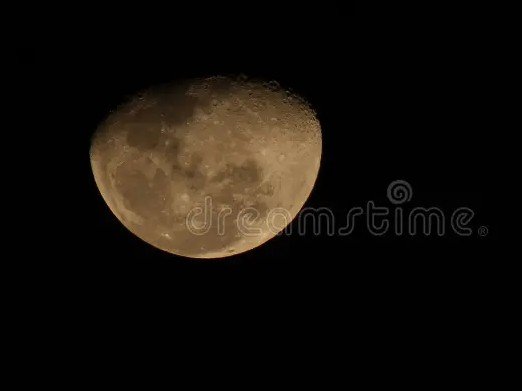
With the Moon growing thinner, surface detail becomes harder to catch, but not impossible.
If you are looking with the naked eye, the Aristarchus Plateau is your main target. It is one of the brightest regions on the Moon and tends to stand out even when illumination is low.
Add a pair of binoculars, and the view improves.
You may be able to make out the Grimaldi Basin, a large dark plain near the Moon’s western edge, along with the Gassendi Crater, which sits on the rim of Mare Humorum.
For those with a telescope, another feature comes into play.
The Reiner Gamma formation, known for its unusual swirling patterns, becomes visible under the right conditions. It does not look like a typical crater, which makes it a favorite among experienced lunar observers.
That said, expectations matter. This is not a night for bold shadows or dramatic contrasts. Details are soft. Subtle. Easy to miss if you rush.
Why the Moon is fading now
The Moon’s appearance changes because of its position relative to Earth and the Sun.
It takes about 29.5 days for the Moon to complete one full cycle, moving through all its phases. During that orbit, we always see the same side of the Moon, but the angle of sunlight shifts constantly.
Right now, the Moon is nearing the point where it sits between Earth and the Sun. As that alignment tightens, the sunlit portion facing us shrinks.
That is why the Moon appears to be “getting smaller,” even though its size never actually changes.
This phase often sneaks up on people. One night the Moon looks thin. A few nights later, it is gone.
When to expect the next full moon
If you are already thinking ahead to brighter nights, there is a date to circle.
The next full moon will occur on January 3. The most recent full moon lit up the sky on December 4, closing out the earlier part of the lunar cycle.
Between now and early January, the Moon will pass through its darkest stretch, then slowly rebuild its glow night by night.
For photographers and stargazers, that quiet period around the New Moon can be useful. Fewer moonlit skies mean better conditions for spotting stars, planets, and meteor activity.
A quick guide to the Moon’s phases
The Moon’s cycle includes eight main phases, each marking a change in how sunlight reaches its surface. NASA outlines them as follows:
-
New Moon – The Moon sits between Earth and the Sun, making it nearly invisible
-
Waxing Crescent – A thin sliver of light appears on the right side in the Northern Hemisphere
-
First Quarter – Half of the Moon is illuminated on the right side
-
Waxing Gibbous – More than half is lit, building toward full
-
Full Moon – The entire face is illuminated
-
Waning Gibbous – Light begins fading from the right side
-
Third Quarter (Last Quarter) – Half of the Moon is lit on the left side
-
Waning Crescent – Only a small arc remains before darkness
Tonight sits near the end of that sequence.
Why waning crescents feel different
There is something understated about a Waning Crescent.
It does not demand attention the way a Full Moon does. It does not dominate the sky. You have to look for it, and sometimes you have to be patient.
Some observers enjoy this phase more than others. It feels personal, like a quiet conversation rather than a loud announcement.
Light pollution can easily wash it out. Clouds can steal it entirely. Still, on a clear night, that slim curve hanging low in the sky has its own appeal.
And soon, it will disappear.
The final look before darkness
December 15 offers one of the last reasonable looks at the Moon before it slips into the New Moon phase.
After that, nights will go darker, and the Moon will slowly start its return, building from a barely-there crescent into something more familiar.
For now, though, the Moon is winding down. Fading gently. Leaving behind just enough light to remind you it is still there.