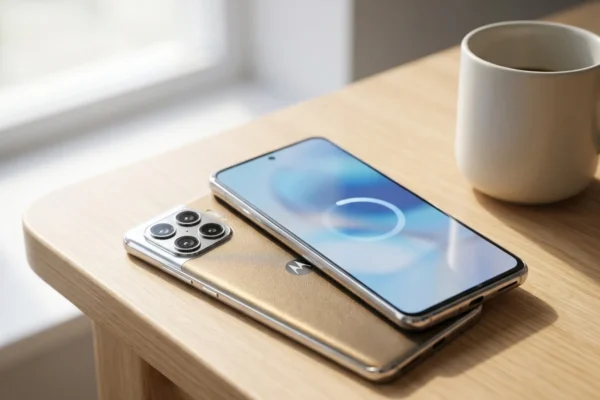
Smartphone fans got big news this week as the OnePlus 15 launched globally, bringing strong battery life and camera tweaks to compete in a crowded market. At the same time, tests showed the eSIM-only iPhone 17 Pro gaining extra endurance, while updates rolled in for Samsung’s Galaxy S26 Ultra, Xiaomi’s 17 Ultra, and Motorola’s Edge 70 Ultra.
This roundup covers the latest from major brands, based on recent announcements and hands-on reviews. With launches happening now in late 2025, these devices aim to push performance boundaries amid rising demand for longer battery life and better cameras.
OnePlus 15 Global Launch and Pricing Details
The OnePlus 15 hit global shelves this month, expanding from its initial China release in October. Priced competitively, it starts at $899 for the 12GB RAM and 256GB storage model in the US, matching last year’s OnePlus 13.
In Europe, the base model costs €949, which is €50 less than before, but the higher 16GB RAM and 512GB version goes for €50 more. Indian buyers see a slight bump, with prices up by ₹3,000 across variants.

Early bird deals ended recently, and the phone is now widely available. It features a 6.78-inch display with a 165Hz refresh rate, powered by the Snapdragon 8 Elite Gen 5 chip.
Reviews highlight its massive 7300mAh battery, supporting 120W fast charging. However, some note downgrades in camera sensors compared to the OnePlus 13.
| Region | 12GB/256GB Price | 16GB/512GB Price |
|---|---|---|
| US | $899 | Not specified |
| Europe | €949 | €999 |
| India | ₹72,999 | ₹79,999 |
iPhone 17 Pro eSIM Battery Test Results
Apple’s iPhone 17 Pro made waves with its eSIM-only version, which packs an extra 254mAh of battery capacity by ditching the physical SIM slot. Recent tests confirm this boosts overall endurance by about 49 minutes in active use.
Browsing time jumps by a full hour, while gaming adds 44 minutes. Video playback stays roughly the same, but the change reflects Apple’s push for slimmer designs without sacrificing power.
This update ties into broader trends, as users search for devices that last longer on a single charge. Compared to the standard model, the eSIM variant scores higher in battery benchmarks, making it ideal for heavy users.
Experts point out that this could influence future phones, especially with global shifts toward eSIM adoption. The iPhone 17 series, announced earlier this year, continues to lead in premium features.
Galaxy S26 Ultra Camera and Design Updates
Samsung’s upcoming Galaxy S26 Ultra is generating buzz with leaked details on its camera setup. Reports indicate a larger punch-hole cutout for the selfie camera, driven by a wider field of view for better group shots.
This design choice contrasts with the slimmer profiles of rivals like the iPhone 17 Pro Max. The S26 Ultra is expected to launch in January 2026, with sales starting in February, sticking to Samsung’s typical schedule.
Rumors suggest it will outperform competitors in zoom and low-light photography. CAD renders show a design similar to the current Galaxy S25 Ultra but with refined edges.
Performance-wise, it’s set to feature advanced AI enhancements for photo editing. This positions it as a top pick for photography enthusiasts.
- Wider selfie camera for improved field of view.
- Potential January launch to beat market rivals.
- Design tweaks for better handling and durability.
Xiaomi 17 Ultra Expected Launch Timeline
Xiaomi is shaking up its schedule with the 17 Ultra, slated for a December launch in China. This is earlier than the usual February rollout, aiming to capture holiday shoppers.
The move could give Xiaomi an edge over competitors like Samsung. Details on specs remain light, but expect high-end cameras and fast charging.
This shift aligns with recent trends where brands accelerate releases to stay ahead. Global availability might follow soon after the China debut.
Motorola Edge 70 Ultra Performance Preview
The Motorola Edge 70 Ultra recently appeared in benchmarks, showcasing the Snapdragon 8 Gen 5 chip. It scored around 2,600 in single-core and 7,500 in multi-core tests, outperforming the Snapdragon 8 Gen 3.
This non-Elite version uses custom Oryon cores for better efficiency. While it trails the Elite Gen 5, it promises solid gains for mid-range flagships.
Motorola aims this at users wanting premium performance without the top price. The phone could launch soon, adding to the competitive 2026 lineup.
In a market full of choices, these updates solve key problems like battery drain and camera quality. Share your thoughts on which device excites you most, and comment below if you’ve tried the OnePlus 15.