In a moment that blended diplomatic decorum with domestic drama, President Donald Trump on Wednesday declared it was “highly unlikely” he would fire Federal Reserve Chair Jerome Powell — hours after reports surfaced that he had recently entertained the idea in private.
Trump’s reassurance, delivered during an Oval Office meeting with Bahrain’s Crown Prince Salman bin Hamad Al Khalifa, did little to quiet speculation in Washington and on Wall Street about the fate of the world’s most powerful central banker. The president, who has long expressed frustration with the Fed’s unwillingness to cut interest rates, added a notable caveat: Powell would be safe “unless he has to leave for fraud.”
That remark, cryptic and unspecific, has only fueled the latest chapter in Trump’s tumultuous relationship with the Fed — an institution traditionally viewed as politically independent.
“Almost Every One of Them Said I Should”
The flare-up began Tuesday night during a closed-door meeting between Trump and roughly a dozen House Republicans at the White House. The lawmakers were there to discuss cryptocurrency legislation, but according to multiple officials briefed on the session, Trump veered into familiar territory: his dissatisfaction with Powell.
“Almost every one of them said I should,” Trump told reporters the following day, referring to the idea of removing Powell. The president even brandished a mock letter of termination during the meeting — though aides later clarified it was merely a “prop” drafted by someone else.
“He waved it like it was a magic wand,” said one White House official, who spoke on the condition of anonymity. “But no one believed he’d actually sign it — not yet.”
Theatrics aside, the incident sparked fresh concern among economic advisers and financial markets. While Powell’s term doesn’t expire until 2028, legal scholars continue to debate whether a president can unilaterally remove a Fed chair without cause.
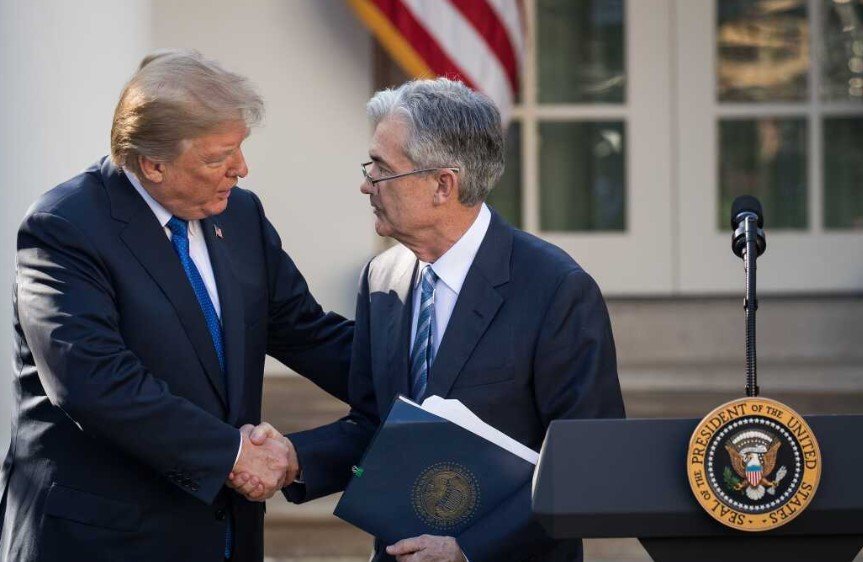
Fed Independence Under Spotlight
The Federal Reserve has long prided itself on being an apolitical body, immune to the short-term whims of elected officials. That firewall has been stress-tested in recent years, particularly under Trump’s second administration, which has repeatedly pressured the central bank to cut rates to stimulate growth.
So far, Powell has resisted.
Under his leadership, the Fed has prioritized inflation control, even as Trump has pushed for aggressive easing ahead of the 2026 midterm elections. The central bank’s benchmark interest rate remains at 4.75%, a level the White House argues is too restrictive given recent GDP softness and rising unemployment in key states.
But Fed officials have stood their ground, warning that premature rate cuts could reignite inflation — a specter still fresh in the public’s memory from the early 2020s.
“Firing the Fed chair because he won’t juice the economy would send a terrible message,” said Alicia Hwang, chief economist at Columbia Global Strategies. “It would undermine confidence in U.S. institutions and potentially trigger capital flight.”
Trump’s Powell Problem
Trump’s hostility toward Powell is not new. In his first term, he openly derided the Fed chair — his own appointee — calling him an “enemy” and blaming the central bank for stock market volatility.
But since returning to office in 2025, the president has sought to consolidate control over what he views as obstructionist bureaucracies. The Powell friction fits neatly into that broader pattern, alongside tensions with the Justice Department, the CIA, and now, apparently, the Securities and Exchange Commission.
The renewed threat against Powell appears to have been catalyzed by a series of recent Federal Open Market Committee (FOMC) decisions to hold rates steady, despite Trump’s public calls for cuts. The president reportedly believes that a looser monetary stance could help bolster his approval rating and revive housing demand — particularly in swing states like Arizona and Michigan.
Still, some insiders believe Trump’s comments are more bark than bite.
“This is Trump-style negotiating,” said a former senior economic adviser. “He threatens, floats ideas, creates a media storm, then backs off — but everyone remembers the threat.”
Global Market Jitters
The private discussion about Powell’s possible ouster rippled quickly across financial markets. U.S. Treasury yields spiked briefly on Tuesday night after reports of Trump’s comments, before settling lower Wednesday after his public backpedal.
Wall Street remains divided over how much to read into the episode. Some analysts dismissed it as political theater. Others warned that even an idle threat could shake investor faith in U.S. monetary policy.
“This isn’t just about Powell,” said Elena Park, head of macro strategy at JP Forsyth. “It’s about the rules. If the president can remove a central banker just because he disagrees with him, every future policy decision becomes political.”
One Mock Letter, Two Messages
Despite the assurances, the image of Trump waving a letter of dismissal — even if meant as a joke — left a lasting impression. One attendee said the president was “smirking” as he held it up.
“He likes to stir the pot,” the lawmaker said. “But I think we all knew he wouldn’t cross that line — at least not now.”
Still, the idea that the president of the United States is openly weighing the fate of the Fed chair — a role historically shielded from political interference — has rekindled debates about reforming central bank governance.
For now, Powell’s job appears safe. But as Trump himself has shown time and again, the distance between a suggestion and an executive action can vanish in a tweet — or a televised Oval Office moment.
Table: Key Fed Chair Legal Protections
| Issue | Current Legal Standing |
|---|---|
| Term Length | 4 years (Powell reappointed in 2022) |
| Removal Criteria | “For cause” only, per Federal Reserve Act |
| Precedent for Removal | None in modern U.S. history |
| White House Interpretation | Ambiguous; no settled Supreme Court ruling |